ISO 27001 consultancy is a service for developing and improving an information security management system, not the purchase of a certificate. UK organisations comparing quotes need to understand the work their own staff must perform and the role of a separate certification body. This guide explains how to scope that decision. It does not certify compliance or interpret every requirement of the standard. Use the applicable standard and professional advice for the organisation’s circumstances, and be cautious of promises that guarantee a result without assessing the actual management system.
Define the intended scope and business objective
Identify the services, locations, teams, technology and information the management system is intended to cover. Explain customer requirements, existing processes and relevant contractual or regulatory obligations. Ask the consultant how scope will be assessed and documented. A narrow scope may require less work while failing to cover the service customers expect. The purpose is a coherent and truthful description of the organisation’s system, rather than reducing the quote by silently excluding difficult parts of the operation.
Ask whether the proposal begins with a gap assessment and what that assessment produces. A useful output identifies existing evidence, missing processes, priorities and responsible owners. It should distinguish documentation from operational practice. Having a policy template is different from implementing and reviewing the process it describes. Request a realistic work plan linked to the organisation’s maturity and available staff, rather than accepting the same short timetable offered to every business regardless of its size, complexity or existing controls.
Compare implementation deliverables
Request an explicit list of consulting work, workshops, document assistance, risk assessment support and training. Ask how the team helps staff make decisions rather than supplying unexplained generic documents. If software is included, identify licences, ongoing charges and export rights. A platform can organise evidence but does not automatically create an effective management system. The organisation should understand its own processes and decisions well enough to operate them after the consultant has completed the engagement.
Clarify how technical remediation is handled. The assessment may identify access, backup, supplier management or other issues requiring practical changes, but the consultancy fee may not include making them. Ask which specialists are available, how additional work is quoted and what remains for internal teams. Keep the cost of operating controls separate from the price of writing documents. A low consultancy quote can become misleading if it assumes substantial unbudgeted work by staff or other suppliers before the organisation is ready for independent assessment.
Distinguish consultancy from certification
ISO explains that it develops standards and does not itself perform certification or issue certificates. Certification is performed by external bodies. Ask which body is being proposed, what its role is and whether relevant accreditation can be verified. Do not assume that a consultant’s own completion document provides the independent assurance a customer requested. Obtain separate clarity on certification charges, audit arrangements and the scope shown on any resulting certificate. Those are part of the purchasing decision, not incidental paperwork to consider at the end.
Ask how independence and potential conflicts are managed where several services are offered together. Request the costs and responsibilities for initial assessment, corrective actions, later surveillance and recertification as applicable. A promise to help with an audit should specify meetings, evidence preparation and support responding to findings. It should not imply that findings can be avoided by using a preferred consultant. The organisation needs an honest evaluation of its system and a plan for addressing gaps, rather than a guarantee disconnected from evidence.

Plan internal ownership and continuing work
Identify a management sponsor and people responsible for maintaining the system. Discuss risk reviews, supplier assessments, staff awareness, internal audit and management review in the context of the actual organisation. Ask how competence will be transferred and what support remains available. A consultant can facilitate work, but ongoing decisions and accountability cannot be reduced to an annual invoice. Budget internal time and ensure processes are realistic enough to continue when the immediate certification project is no longer receiving exceptional attention.
Compare proposals using the same scope, current maturity and intended outcome. Include consultancy, tools, technical changes, certification and ongoing operation in the budget. Request relevant references, a clear schedule and ownership of all deliverables. Keep unresolved assumptions visible. A useful engagement produces an information security management system the organisation can explain and maintain, with independent certification considered on its proper terms. The strongest commercial choice supports that continuing capability rather than treating the cheapest path to a logo as the measure of success.
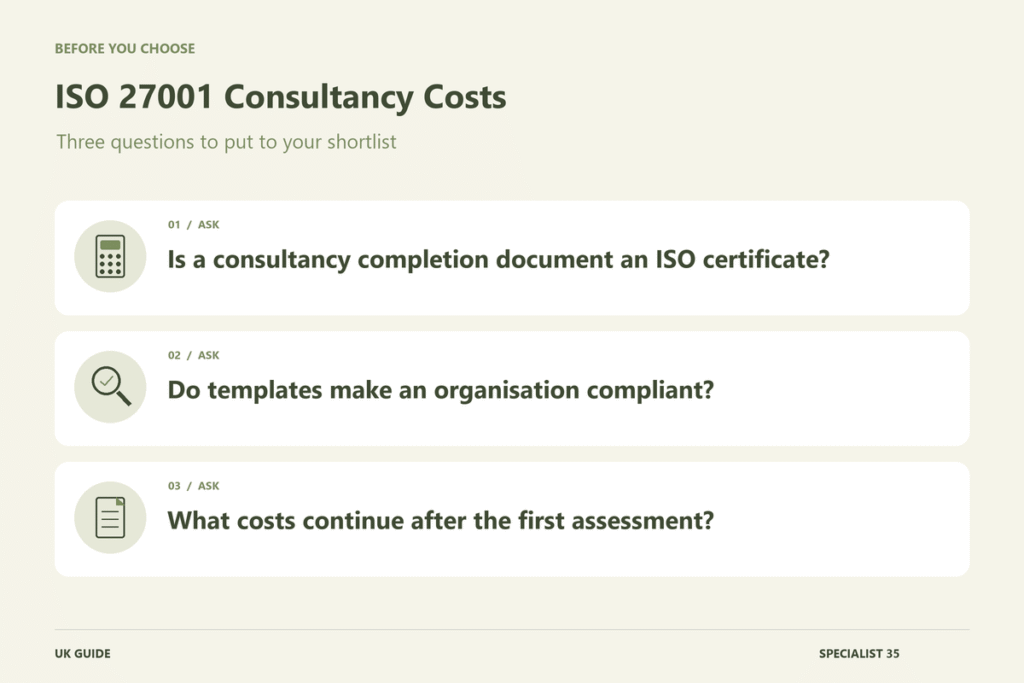
Is a consultancy completion document an ISO certificate?
Not necessarily. Ask who issues it, what it represents and whether it meets the customer’s requirement for independent certification. ISO itself does not certify organisations, so verify the actual certification body and relevant accreditation information.
Do templates make an organisation compliant?
Documents need to reflect implemented processes, responsibilities and evidence. Ask how the consultant helps the organisation make and maintain those changes. A library of policies can support work without proving that the management system operates effectively.
What costs continue after the first assessment?
Consider staff time, controls, tools, reviews, consultant support and certification-related activity. Request a continuing budget rather than comparing only the initial project fee. The system needs maintenance as services, risks and organisational responsibilities change.
Further reading
- ISO: ISO/IEC 27001 information security management
- ISO: Certification and external certification bodies
Related reading
- Cloud Migration Consultants: Comparing Discovery, Migration and Ongoing Support Fees (UK)
- SASE Providers: Comparing Network Security, Deployment and Per-User Costs (USA)
- SOC-as-a-Service Pricing: Comparing Monitoring, Incident Handling and Contract Limits (USA)
- SaaS Penetration Testing Services: Comparing Scope, Retesting and Provider Quotes (USA)
Explore more in Enterprise IT and Security Services.