Comparing Invisalign with braces involves more than comparing two advertised starting prices. The treatment plan, complexity, supervision and retention arrangements determine what a clinic is actually offering. Invisalign is a brand of clear aligners, while braces and other aligner systems can be used in different clinical circumstances. This guide helps US patients understand written cost proposals after a professional assessment. It does not recommend an appliance or determine suitability. Orthodontic treatment is clinical care, and the appropriate options should be explained for your teeth, bite and health.
Compare clinically appropriate plans
Ask the treating clinician to explain the problem being addressed, the intended result and the reasonable alternatives. A limited plan for selected teeth should not be compared as though it provides the same treatment as a comprehensive bite correction. Request the scope in writing and ask what it does not attempt to change. The American Association of Orthodontists notes that suitability varies between individuals. A lower quote is meaningful only once you understand whether both proposed plans address the same clinical goals.
Identify who examines you, designs treatment and monitors progress. Ask about the clinician’s qualifications and how access works if something concerns you between appointments. Confirm whether visits are in person, remote or combined and what circumstances require an examination. A convenient monitoring option should be assessed with the clinical plan rather than treated as a complete substitute for professional involvement. If another clinician will take over partway through treatment, ask how that change is communicated and how records and responsibility transfer.
Request an itemised treatment price
Ask whether the quote includes initial examination, photographs, scans, necessary imaging, appliances and routine review visits. Identify other dental work recommended before treatment and whether it is billed separately. For aligners, request the terms for replacement trays, additional scans and refinements. For braces, ask about adjustments, repairs and removal. The comparison should describe the work included, rather than simply count the appliances supplied. Treatment that extends beyond the initial plan can have different clinical and financial consequences under different contracts.
Discuss changes and interruptions. Ask what happens if progress is slower than expected, appointments are missed or appliances are lost or damaged. Clarify any time limits on the package and whether changing providers would create further charges. Avoid assuming a treatment duration is a guaranteed completion date. The clinician should explain factors affecting progress, while the administrator should explain the agreement’s financial terms. Both answers matter when deciding whether a payment plan or package provides a manageable commitment.
Include retention and future maintenance
Ask what retention is recommended after active treatment and how it is monitored. The first retainers may be included, supplied separately or subject to a defined replacement arrangement. Identify the type, number of sets, review period and cost of future replacements. Do not treat the end of active appliance use as the end of every associated expense. A fair comparison includes the planned retention phase and explains what the patient must do to preserve results under the clinician’s instructions.
Request a written explanation of any warranty or result-related promise. Ask which events are covered, how long the arrangement lasts and what conditions apply. A promise of a straight smile should not be interpreted as a guarantee of a particular bite, appearance or lifelong outcome. Discuss concerns about expectations during the clinical consultation. Before-and-after photographs can illustrate someone else’s treatment, but they do not establish that the same plan, timescale or result is appropriate for you.

Compare insurance and payment plans
Ask the insurer or benefits administrator how your specific orthodontic cover applies, including age restrictions, lifetime limits, network rules or documentation requirements where relevant. A clinic’s estimate of benefits is not a final promise from the insurer. Request the patient balance and what happens if the insurer pays less than expected. If financing is offered, identify the creditor, deposit, payment schedule, interest and fees. Compare the total amount payable rather than deciding solely on a monthly amount that may conceal a longer commitment.
Put the clinically appropriate plans side by side: goals, supervision, included appointments, adjustments or refinements, retainers and total patient cost. Verify professional licensing through the relevant state resources and allow time to understand consent and payment documents. Obtain another clinical opinion if the recommended scope remains unclear. The strongest purchasing decision is a treatment arrangement you understand and can follow, with costs and responsibilities explained. An appliance brand or attractive starting price cannot by itself establish clinical suitability or the full cost of care.
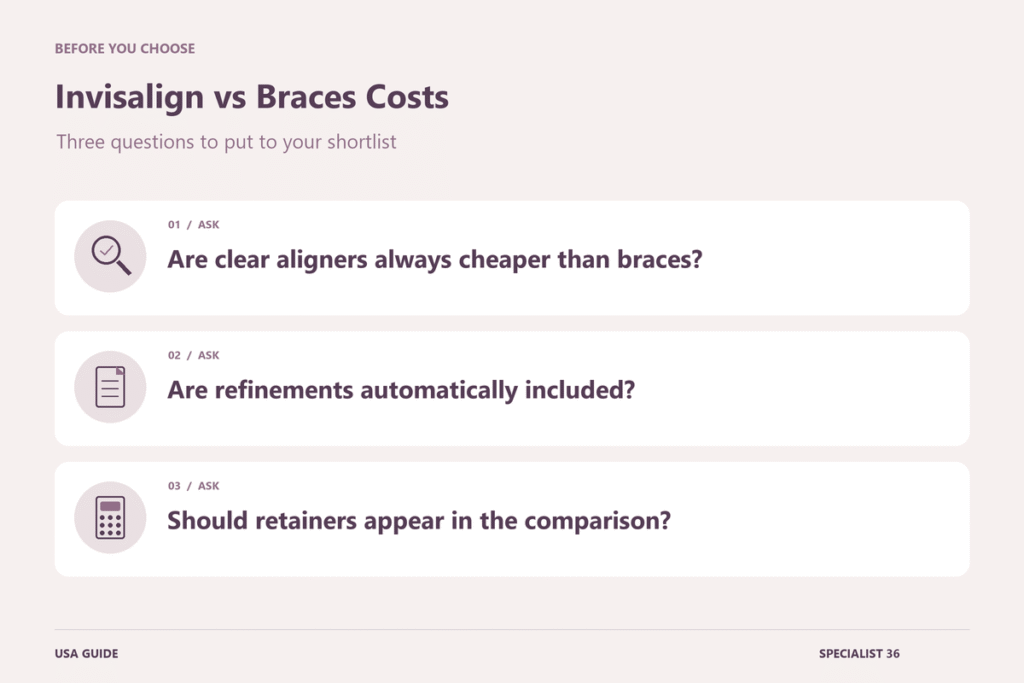
Are clear aligners always cheaper than braces?
There is no universal price relationship for every patient and treatment plan. Compare actual assessed proposals covering the same clinical goals. Complexity, supervision, package limits and retention can matter more than the appliance category or an advertised starting figure.
Are refinements automatically included?
Check the written package. Ask about additional scans, aligner sets, time limits and clinical conditions. The fact that further adjustment may be discussed during treatment does not establish that every related cost is included in the original price.
Should retainers appear in the comparison?
Yes. Ask what the clinician recommends, what the initial package supplies and how replacements or reviews are charged. Retention is a distinct part of planning for the period after active treatment and should not be left financially unexplained.
Further reading
Related reading
- Gum Graft Surgery Costs: Comparing Specialist Quotes and Insurance Benefits (USA)
- Root Canal Retreatment Costs: Comparing Endodontist Fees, Imaging and Crown Expenses (USA)
- Sedation Dentistry Costs: Comparing Sedation Fees and Treatment Packages (UK)
- Porcelain Veneers Costs: Comparing Preparation, Laboratory Fees and Aftercare (UK)
Explore more in Private Dental Treatments.