Gum graft surgery quotes can differ because the treatment area, technique, material and supporting care differ. A per-tooth headline price may not describe the same procedure offered by another periodontist. This guide helps US patients compare written estimates following a clinical assessment. It does not determine whether grafting is necessary or recommend a technique. A dental professional should explain the reason for treatment, expected benefits, material risks and alternatives based on your oral health, rather than on a general cost comparison or cosmetic advertisement.
Clarify the diagnosis and treatment objective
Ask which sites are affected and what the proposed procedure is intended to achieve. The American Academy of Periodontology describes gum grafting as a procedure used in the context of exposed roots and gum recession. Your own assessment should explain the specific problem, relevant causes and reasonable options. Ask whether other care is recommended first and what happens if treatment is deferred. A quote becomes easier to interpret when it is connected to a clear clinical objective instead of a vague promise of improved gums.
Request a treatment plan identifying the number and location of sites, proposed technique and material. Ask how the clinician chose that approach and whether a different plan would change expected benefits, recovery or cost. Two quotes may use different methods for a legitimate clinical reason. The task is not to choose a surgical technique from a price list, but to understand the reasoning well enough to seek clarification or a second opinion where recommendations appear substantially different.
Separate consultation, surgery and related care
Ask whether the estimate includes assessment, imaging, surgical fees, material, local anaesthesia and scheduled postoperative visits. Identify specialist and general dental work billed separately. If additional services are recommended, request the clinical reason and whether they are optional or necessary for the proposed plan. A surgery-only fee should not be compared with a package including preparation and follow-up as though the difference is simply the clinic’s markup. Build the comparison around complete care for the same assessed problem.
Discuss comfort and anxiety needs with the clinical team. If sedation is considered, ask about suitability, assessment, qualified staff, monitoring and additional charges. It is not simply an upgrade to select because financing makes it affordable. Provide a complete medical and medication history and follow the clinician’s instructions. The cost proposal should identify the planned arrangement, while clinical advice explains what is appropriate and what preparation or assistance will be required on the day.
Understand insurance estimates and personal cost
Ask the clinic which information it submits to the insurer and request a written estimate of benefits where available. Verify coverage, network participation, deductibles, annual limits and any relevant restrictions directly with the insurer. The plan’s treatment of a procedure can depend on documentation and contract terms. Do not assume that an estimate or pre-treatment review guarantees final payment. Obtain the clinic’s explanation of who pays any shortfall and how changes in the treatment plan affect the patient’s balance.
If different sites are treated at different times, ask how staging affects both clinical care and billing. Insurance timing should not substitute for a professional assessment of appropriate scheduling. Request the expected total for the agreed plan and any separate consultation or material charge repeated at each stage. A useful financial discussion makes the patient’s obligations clear without pressuring them to proceed before understanding the clinical options. Keep the treatment proposal and benefits correspondence together for later reference.
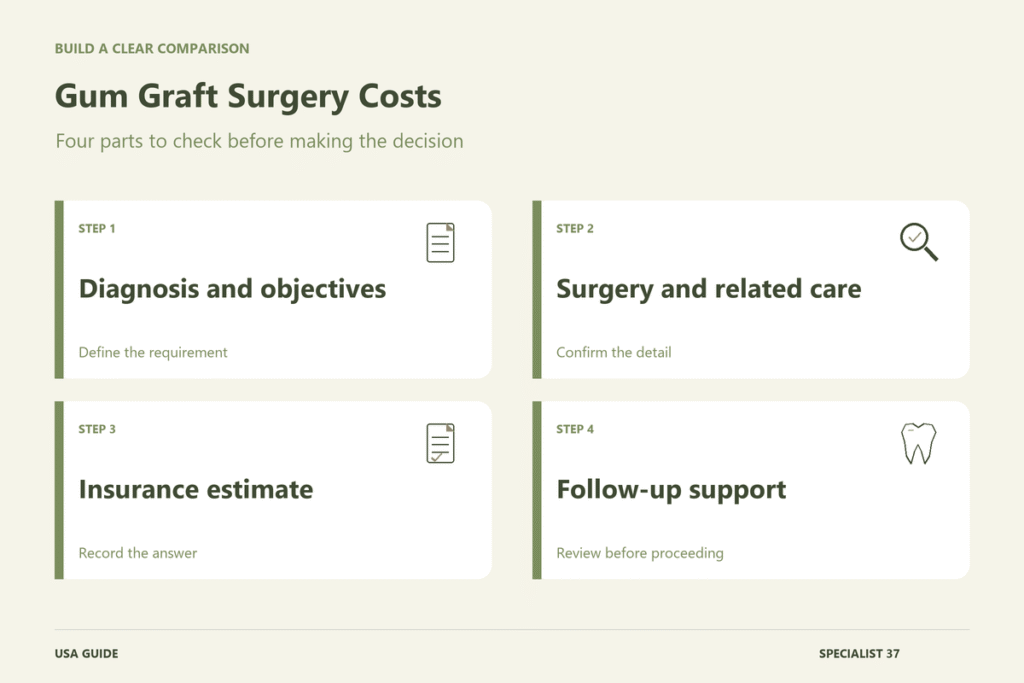
Examine follow-up and practical support
Ask what reviews are planned, who answers concerns and how an unexpected problem is assessed. Obtain written postoperative instructions from the treating team rather than relying on general advice online. Discuss time away from work, transport if needed and assistance with any restrictions the clinician recommends. These practical costs can matter even when the surgery fee is insured. A nearby provider with clear follow-up arrangements may offer a different experience from a distant package with a similar headline price.
Compare the clinicians’ qualifications and professional standing alongside the proposed care and complete patient cost. Ask how expected outcomes and uncertainty are explained, particularly where the objective includes appearance or sensitivity. No provider should use another patient’s photograph as a guarantee of your result. The strongest decision is based on an understood diagnosis, a justified treatment plan and a transparent account of fees and follow-up. If two proposals remain difficult to reconcile, request clinical clarification before treating the cheaper one as equivalent care.
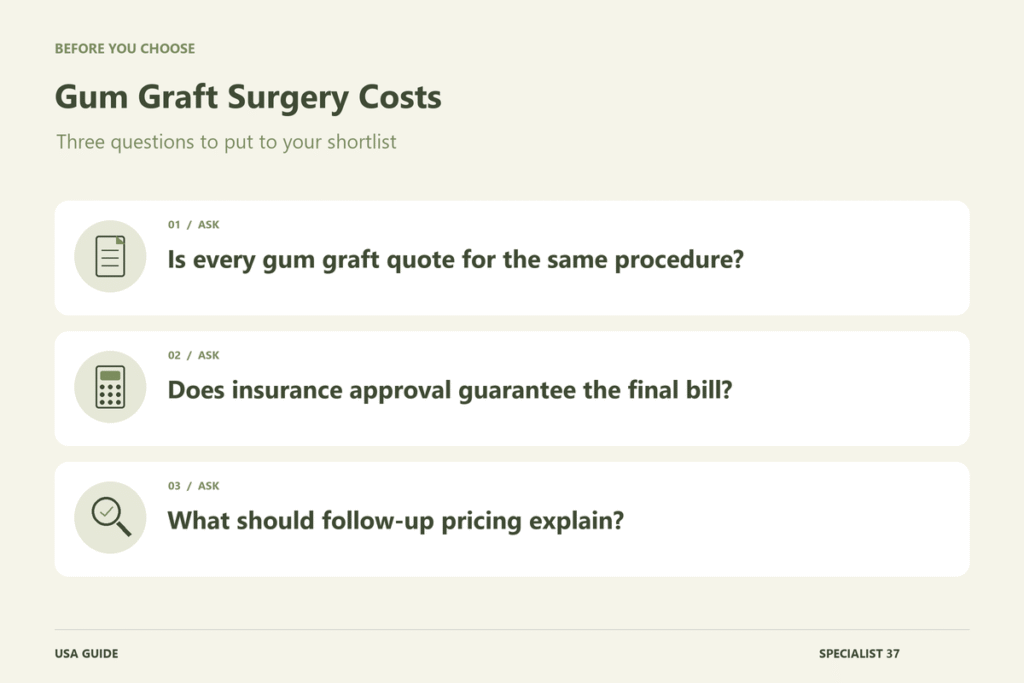
Is every gum graft quote for the same procedure?
No. Sites, technique, materials and supporting care can differ. Ask for the assessed treatment plan and a clear explanation of the approach. Price comparisons should follow that clinical understanding rather than substitute for it.
Does insurance approval guarantee the final bill?
Check the insurer’s actual terms and the status of any estimate. Ask about limits, patient responsibility and treatment changes. A preliminary benefits calculation should not be treated as an unconditional promise that no additional balance can arise.
What should follow-up pricing explain?
It should identify planned reviews, access for concerns and any separately charged care. Ask who manages issues after surgery and which parts of the package have time or scope limits, while following the treating clinician’s individual instructions.
Further reading
Related reading
- Invisalign vs Braces Costs: Comparing Treatment Quotes, Retainers and Follow-Up Fees (USA)
- Root Canal Retreatment Costs: Comparing Endodontist Fees, Imaging and Crown Expenses (USA)
- Sedation Dentistry Costs: Comparing Sedation Fees and Treatment Packages (UK)
- Porcelain Veneers Costs: Comparing Preparation, Laboratory Fees and Aftercare (UK)
Explore more in Private Dental Treatments.