Hiring a maritime injury lawyer starts with identifying the work you actually performed, the vessel involved and the circumstances of the injury. A firm advertising offshore claims may handle very different matters from a practice representing ferry crews or commercial fishing workers. The useful comparison is whether the proposed team understands your employment and the possible legal routes. This guide helps US readers prepare that comparison; it does not determine eligibility, calculate compensation or replace advice about an individual incident.
Establish the maritime claim before comparing fees
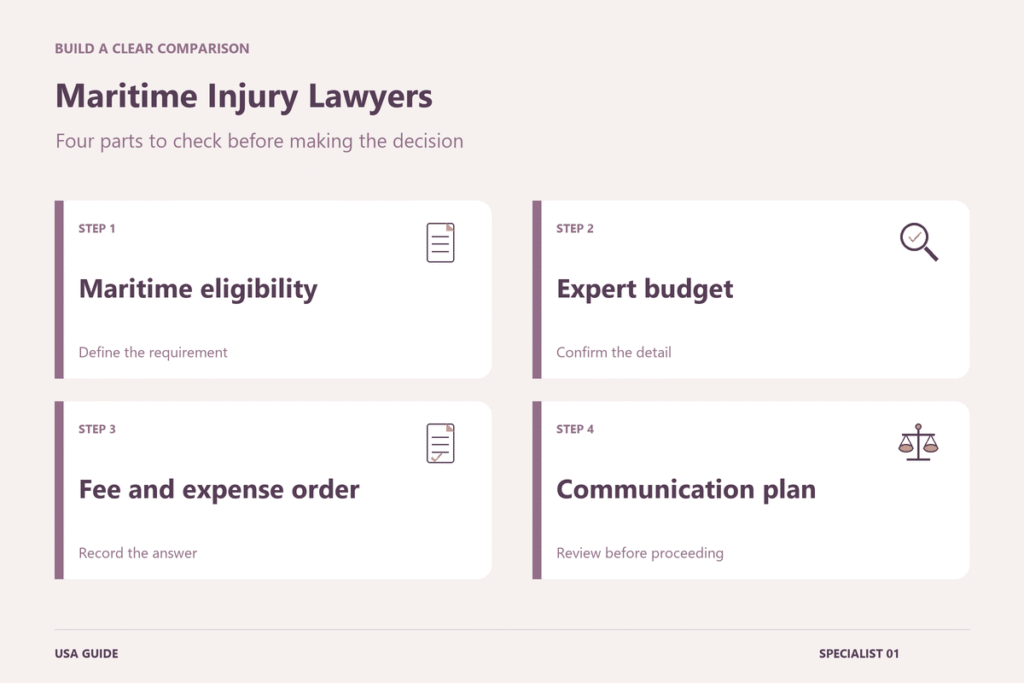
The Jones Act provides a negligence action against an employer for a qualifying seaman injured in the course of employment. Whether someone qualifies requires legal analysis; a maritime job title alone does not answer the question. Ask the lawyer which facts about vessel connection, duties and employment they need to assess. Other maritime remedies or compensation systems may also require consideration. Have the firm explain its proposed analysis in ordinary language rather than promising that every offshore injury produces the same claim.
Bring a factual chronology covering employment, vessels, locations, supervisors, injury reporting and treatment. Include contracts, available pay records, correspondence and photographs you already possess lawfully. Note records held by the employer or another organisation without attempting to obtain restricted material yourself. A useful first consultation separates what is known from what still needs investigation. Ask who will contact witnesses, request preservation of relevant material and explain any urgent steps. Timing should be assessed for your circumstances rather than inferred from a general internet deadline.
Examine the investigation budget
Maritime cases can involve engineering, navigation, workplace procedures and medical evidence. Request an explanation of which specialists might be necessary and why. The answer should connect proposed spending to a disputed issue: equipment condition, vessel operations, work practices or the consequences of an injury. An expensive expert roster is not automatically evidence of a better case. Ask when the firm seeks client approval for substantial expenses and whether it provides periodic accounting as investigation develops.
Find out who performs the work when the lead attorney is unavailable. A firm may use local counsel, maritime specialists or outside investigators. Ask which organisation holds the engagement, which lawyers will appear where necessary and how responsibility is divided. If the matter involves foreign ports, multiple employers or a vessel registered elsewhere, discuss those complications specifically. Geographic reach should mean a workable representation plan, with identified professionals and communication arrangements, rather than a list of impressive office locations on a website.
Read the recovery and expense provisions together
A contingency percentage does not describe every financial obligation. Request a written explanation of litigation expenses, their repayment and the calculation of the lawyer’s fee. Ask whether the percentage changes at different stages and whether expenses are deducted before or after that calculation. Have the attorney show a clearly labelled hypothetical accounting using invented figures, including any other deductions that might apply. The illustration is for understanding the agreement and should never be presented as an estimate of what your case will recover.
Ask what happens if the firm declines the case after an initial investigation, if representation ends early, or if there is no recovery. Treatment funding, benefits and case financing deserve separate explanations. Do not assume that a law firm arranging an introduction to a funder makes that funding free or suitable. Obtain each agreement, identify the organisation receiving payment and discuss the effect on your eventual position. A transparent firm should allow time to understand the documents before you commit.
Assess support during a long investigation
Recovery from an injury and participation in litigation can place competing demands on a household. Discuss access needs, telephone or video meetings, document handling and a realistic update schedule. If work involves time at sea or unreliable communications, agree on practical alternatives. Ask who explains employer correspondence and who records changes in treatment or employment. Avoid sending sensitive records through informal channels without asking how the firm protects them. Reliable administration matters because missing information can impede an otherwise well-resourced legal investigation.
Make a shortlist using the same factual summary and a simple record of each firm’s answers. Compare maritime experience, proposed initial work, staffing, expense authority and the clarity of the agreement. Check professional standing with the appropriate state lawyer regulator and distinguish verifiable experience from advertising claims. The most useful next step is a consultation that resolves eligibility and urgent issues, followed by a written engagement you understand. Neither a large verdict advertised from another case nor a confident prediction establishes the likely result of yours.
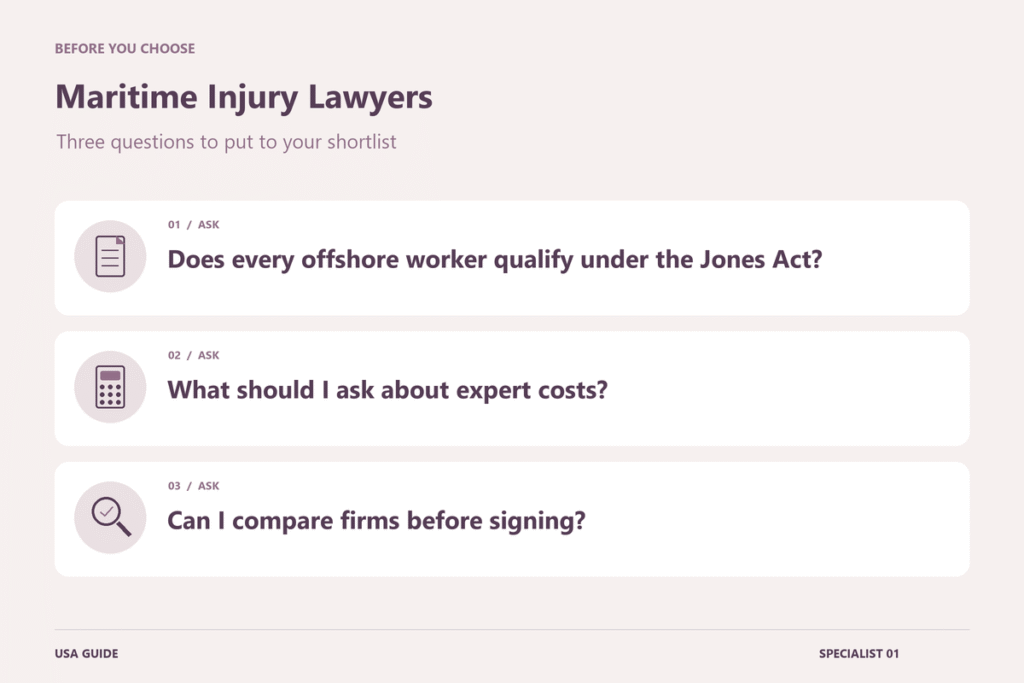
Does every offshore worker qualify under the Jones Act?
No single job label settles eligibility. Ask counsel to assess the relationship between your duties, employment and vessel connection, along with alternative legal routes. Provide accurate work history rather than selecting a description because it appears to fit an advertisement.
What should I ask about expert costs?
Ask which disputed issues require expert evidence, who authorises spending and how those costs are repaid. Request the terms in the engagement rather than relying on a verbal statement that the firm will handle everything.
Can I compare firms before signing?
You can seek another consultation, but ask promptly about time-sensitive steps. Avoid assuming that an enquiry or document upload creates representation. Confirm when a firm formally accepts responsibility for the matter and how it will communicate that acceptance.
Further reading
Related reading
- Nursing Home Abuse Attorneys: Evidence, Expert Costs and Case Funding (USA)
- Aviation Accident Law Firms: Comparing Jurisdiction Experience and Investigation Resources (USA)
- Defective Medical Device Claims: Comparing Solicitor Fees and Expert Evidence (England & Wales)
- Holiday Accident Solicitors: Overseas Claims, Legal Costs and Representation (England & Wales)
Explore more in Specialist Injury and Product Liability.