Sedation dentistry pricing should describe both the dental procedure and the support used to help the patient receive it. A quote for sedation alone is not necessarily a complete treatment package. UK patients comparing providers need a clinical assessment of suitability, a clear plan and an explanation of total fees. This guide concerns those purchasing questions. It does not recommend medication, a sedation technique or instructions for preparation. Follow the treating team’s individual advice and discuss health, medicines and previous experiences openly during assessment.
Separate dental treatment from anxiety management
Ask what dental work is proposed and why sedation is being considered. Conscious sedation is different from general anaesthesia, and the labels should not be used interchangeably. NHS guidance describes sedation as part of a broader approach to helping people access care. Ask the clinician to explain the options appropriate for your needs, including relevant alternatives. A provider should not recommend a technique simply because it is the package most prominently advertised or the one that makes an appointment easiest to schedule.
Explain medical conditions, medicines, allergies, previous sedation experiences and access needs accurately. Ask who carries out the assessment and whether other professional input is required. Suitability can affect the proposed setting, staff and appointment plan. A preliminary telephone price may change after clinical assessment for a legitimate reason, but the revised scope and cost should be explained before commitment. Do not hide health information because you worry it will make care more expensive; safe planning depends on a complete account.
Request a complete fee breakdown
Ask whether the quote includes the initial assessment, sedation, dental work, monitoring and recovery arrangements. Identify whether pricing is per appointment, by duration or under another structure. Find out how longer treatment, incomplete work or an additional visit is handled financially. If several dental procedures are proposed, ask how they will be scheduled and whether the quote assumes they can all be completed in one session. That assumption should follow clinical planning rather than an attempt to minimise the apparent package price.
Clarify which clinicians provide the sedation and treatment and how their charges are combined. Ask about the setting, staff qualifications and arrangements for responding to complications or transfer if necessary. Those are questions for the provider’s explanation, not a checklist patients should use to supervise clinical practice themselves. The important purchasing issue is whether responsibilities are clear and the proposed service is appropriate. A low fee with unexplained staffing or recovery arrangements is not a meaningful comparison with a clearly defined care package.
Understand preparation, consent and practical costs
Obtain the provider’s written preparation and discharge instructions for the specific plan. Ask whether an escort, transport or time away from work will be required. These practical arrangements can affect total personal cost and whether the appointment can proceed. Do not rely on another patient’s instructions, because requirements may differ. If you are unable to meet an instruction, tell the team in advance so it can discuss options rather than discovering the issue only after you arrive for treatment.
The General Dental Council emphasises appropriate discussion and documentation of consent, including costs. Ask questions before sedation and allow time to consider the proposed treatment and alternatives. Clarify what changes in the dental plan may be made during the appointment and how consent will be handled. A signed form is part of the process rather than a substitute for understanding. Payment arrangements should not pressure you to accept a clinical plan you have not had an opportunity to discuss with the treating professional.

Compare cancellation and follow-up terms
Ask about deposits, cancellation notice and charges if clinical circumstances prevent the planned sedation. Identify which costs are refundable and how a rescheduled appointment is treated. Request the process for concerns after discharge and clarify whether follow-up is included. If more dental work remains, ask who coordinates it and whether later sedation needs a new assessment. The package should describe the course of care rather than focus only on the period spent in the treatment chair.
Check the relevant professionals on the GDC register and identify the provider’s applicable service regulator for the UK nation involved. Compare the assessed plan, total fee, practical support and continuing care. If NHS-funded options may be relevant, ask the appropriate services about access and eligibility separately from private quotes. Choose on the basis of a clear clinical explanation and manageable arrangements. Sedation is intended to support appropriate care; its value cannot be judged solely by selecting the lowest price attached to a reassuring phrase such as relaxed dentistry.
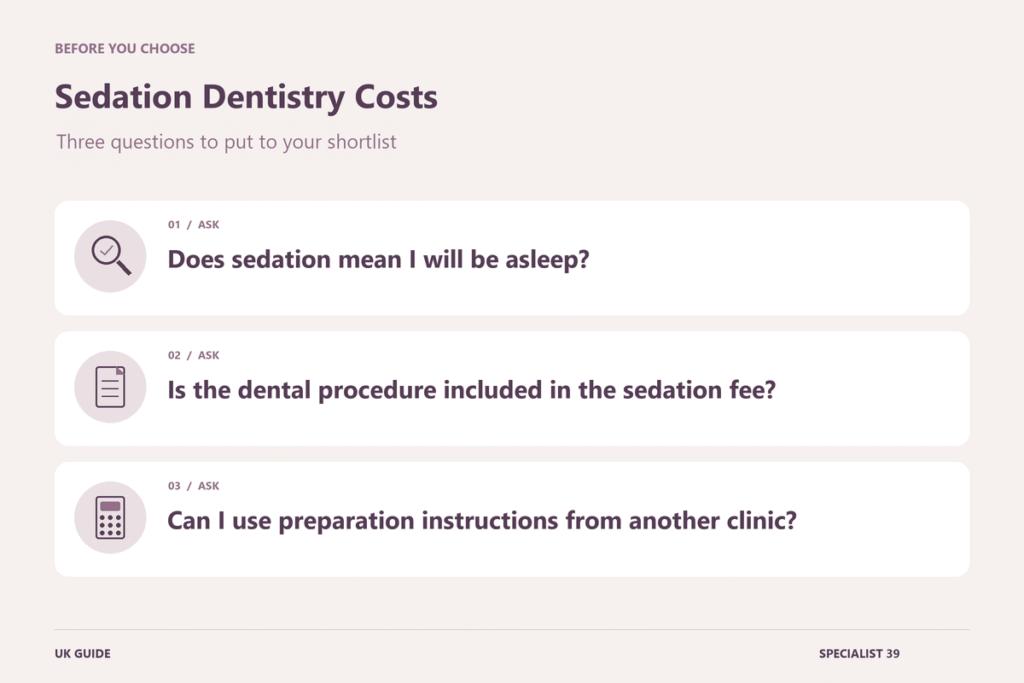
Does sedation mean I will be asleep?
Not necessarily. Conscious sedation and general anaesthesia are different approaches. Ask the clinician to explain what is proposed, what you may experience and why it is appropriate. Do not infer the technique from a provider’s marketing language.
Is the dental procedure included in the sedation fee?
Check the breakdown. Assessment, sedation and the dental work can be priced separately. Ask how additional visits or changes in duration affect the total so the comparison reflects the complete assessed care plan.
Can I use preparation instructions from another clinic?
Follow your treating team’s instructions for your own procedure and health circumstances. Ask for clarification if anything is difficult to follow. General information and another patient’s experience do not replace that individual guidance.
Further reading
Related reading
- Porcelain Veneers Costs: Comparing Preparation, Laboratory Fees and Aftercare (UK)
- Root Canal Retreatment Costs: Comparing Endodontist Fees, Imaging and Crown Expenses (USA)
- Gum Graft Surgery Costs: Comparing Specialist Quotes and Insurance Benefits (USA)
- Invisalign vs Braces Costs: Comparing Treatment Quotes, Retainers and Follow-Up Fees (USA)
Explore more in Private Dental Treatments.