A medical device problem can create questions about treatment, product performance, professional care and legal responsibility at the same time. Comparing solicitors requires separating those questions before comparing prices. This guide is for prospective claimants in England and Wales considering a defective medical device matter. It explains what a proposal should cover, including records, expert evidence and funding. It does not establish that a device is defective, that a manufacturer is liable or that a particular person’s symptoms were caused by the product.
Define the product and the alleged problem
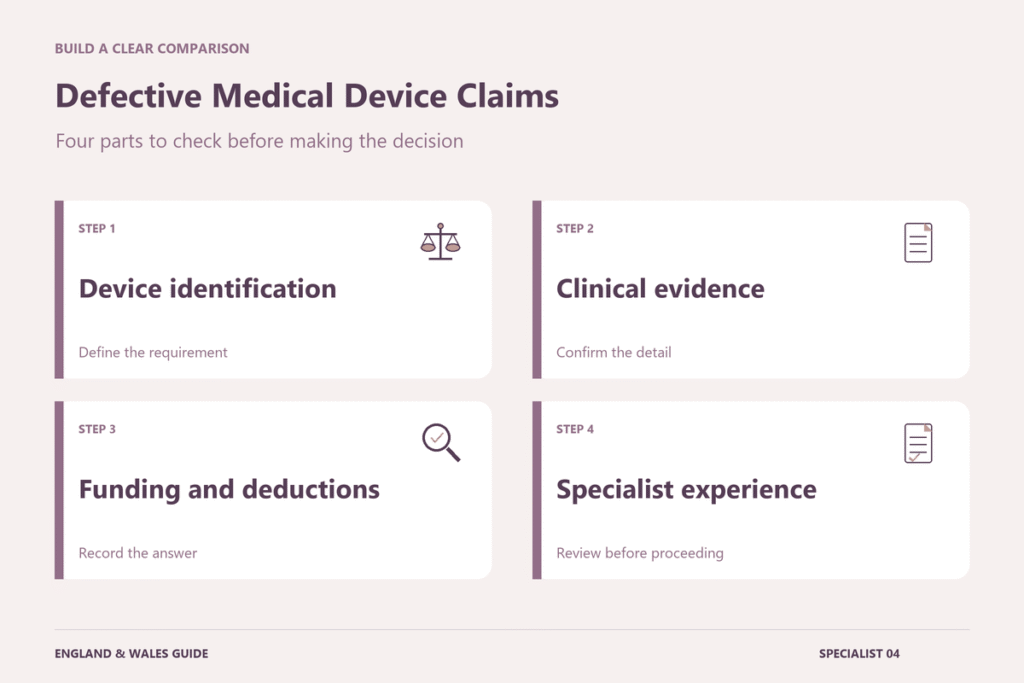
Gather the device name, manufacturer, model and any implant or patient identification card available. Record the date of use or implantation, treating organisation and what you were told about the problem. Include correspondence concerning recalls or safety notices, but do not assume that a notice proves your individual claim. Ask the solicitor which legal routes require assessment and how they distinguish a product issue from an allegation about how a clinician selected, fitted, monitored or removed the device.
Your clinical needs come first. Discuss symptoms, monitoring and treatment with appropriate healthcare professionals rather than waiting for a legal opinion. Do not attempt to remove or alter a device or retain clinical material without professional instructions. If a device is replaced, ask the legal team how any evidence-preservation request should be handled through the treating organisation. A careful solicitor should coordinate requests without obstructing necessary care or telling a patient to take steps that are medically inappropriate.
Compare the proposed evidence review
Ask what the firm expects to obtain from medical records, product documentation and technical information. The first review should identify gaps and explain which evidence might connect the alleged defect to the harm claimed. A product engineer and a medical expert answer different questions; neither is automatically required in every matter. Request the reasons for proposed reports and the stage at which they would be commissioned. That helps you understand whether the budget reflects the actual dispute.
Regulatory reporting is a separate process. GOV.UK provides information about reporting problems with medicines and medical devices, including differences between reporting routes across UK nations. An adverse incident report can supply important information for safety monitoring, but it does not replace legal advice or guarantee compensation. Tell the solicitor about any report you have made and retain the confirmation. Ask whether a safety notice, investigation or manufacturer response changes the legal work required, rather than treating those developments as a completed case assessment.
Understand costs beyond a headline success fee
Request a written funding explanation covering the solicitor’s charges, expert reports, records, insurance and other expected disbursements. If conditional funding is offered, ask how the arrangement operates if the claim succeeds, fails or ends early. Have the firm explain possible deductions from damages, liabilities for costs and any insurance premium. Different funding components may be governed by different documents. Read them together, and ask for a worked illustration clearly identified as an example rather than a prediction of damages.
Device claims sometimes involve many people affected by the same product. Ask whether the firm anticipates an individual claim, coordinated work or participation in a formal group process. Establish who decides strategy, how shared costs are allocated and whether your medical circumstances require separate evidence. Enquiring about a group action is not the same as becoming a represented claimant. Obtain confirmation of acceptance, the engagement scope and the practical consequences of leaving or changing representation before signing.
Check specialist experience and administration
Look for experience addressing both product evidence and the consequences for patients, supported by a clear staffing plan. Ask who reviews correspondence, tracks records and explains developments when technical findings are uncertain. Confirm whether another firm or specialist counsel may be involved and what that means for costs. Check the firm and relevant solicitor through the appropriate professional register. Membership logos, advertising claims and reports of unrelated settlements should be treated as starting points for questions, rather than substitutes for this verification.
Compare proposals against the same short chronology and product details. A useful engagement identifies what the firm will investigate initially, the costs you may face and the circumstances in which it might reconsider the claim. Ask promptly about potential time limits; their application needs individual legal advice. Keep copies of signed funding documents and identify your contact for questions. Choosing a transparent team makes the investigation easier to understand, even where the eventual evidence does not support the result initially hoped for.
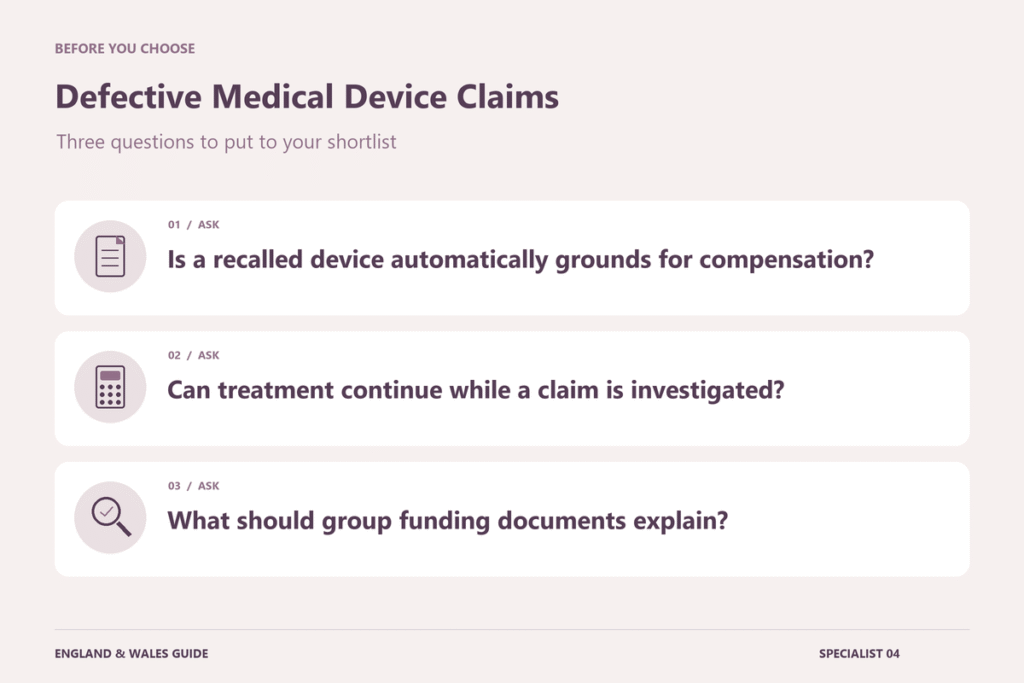
Is a recalled device automatically grounds for compensation?
No automatic conclusion should be drawn. Ask a solicitor to examine the applicable legal route, the particular product issue and evidence about your injury. A recall or safety notice may be relevant without resolving all the questions a claim must address.
Can treatment continue while a claim is investigated?
Medical decisions should be made with your clinical team. Tell your solicitor about planned procedures so appropriate record and evidence requests can be discussed. Legal investigation should not be used as a reason to delay necessary treatment.
What should group funding documents explain?
They should describe your representation, shared work, cost allocation and possible obligations if you withdraw. Ask how personal medical evidence and settlement decisions will be handled, including the parts that remain specific to you.
Further reading
Related reading
- Holiday Accident Solicitors: Overseas Claims, Legal Costs and Representation (England & Wales)
- Aviation Accident Law Firms: Comparing Jurisdiction Experience and Investigation Resources (USA)
- Nursing Home Abuse Attorneys: Evidence, Expert Costs and Case Funding (USA)
- Maritime Injury Lawyers: Jones Act Experience, Investigation Costs and Legal Fees (USA)
Explore more in Specialist Injury and Product Liability.