False Claims Act representation concerns alleged fraud involving government claims or funds, rather than every workplace grievance or disagreement with a contractor. For a potential whistleblower, choosing counsel also involves confidentiality, evidence handling and personal risk. This US guide explains how to compare lawyers for a possible federal qui tam matter. It is not a method for establishing fraud, obtaining protected documents or predicting an award. Early professional advice should address both the allegations and the person’s own circumstances.
Check whether the alleged conduct fits the legal route
Prepare a factual summary of the organisation, the government programme or contract involved, the suspected conduct and how you learned about it. Explain which information is firsthand and which is inference. The Department of Justice describes the False Claims Act as allowing certain private suits on behalf of the government. A lawyer must still assess whether the particular facts support that route. An improper business practice does not become a viable qui tam case merely because it appears serious.
Ask how the firm distinguishes a possible False Claims Act issue from employment, regulatory, contractual or other claims. Some concerns may require different advice or additional lawyers. Tell counsel about relevant employment agreements, past reports, legal advice already received and any proceedings you know about. Do not omit information because it appears unfavourable. A complete assessment helps the attorney consider potential obstacles, competing interests and the advice needed before deciding whether to accept representation.
Discuss confidentiality before sending large records
Contact the firm through an appropriate channel and ask how an initial enquiry is handled. Do not assume that a website form is the right place to upload sensitive records about other people. Ask what information is needed to check conflicts and assess the enquiry. Identify documents that exist without copying restricted systems or taking material you are not entitled to access. The lawyer should explain lawful evidence preservation and communication arrangements tailored to your role and the information involved.
Federal qui tam procedure includes special requirements, including filing under seal. Ask counsel to explain confidentiality obligations and what can be discussed with employers, colleagues or others. Do not treat a seal as a promise of permanent anonymity or immunity from every personal consequence. If retaliation or employment action is a concern, request specific advice and establish whether it falls within the engagement. A firm should distinguish the government’s case, the whistleblower’s position and any separate employment representation.
Compare investigative and litigation capability
Ask about experience evaluating the relevant programme or industry and presenting evidence coherently. Billing records, contract requirements, technical systems and clinical documentation can require different expertise. Request a plan for initial analysis, including how the team identifies gaps and tests alternative explanations. A large volume of documents is not a substitute for evidence connecting particular conduct to the legal requirements. The firm’s process should assess reliability and context rather than simply collect material and promise that investigators will take it from there.
Government involvement is a significant procedural consideration, but its decision cannot be guaranteed by private counsel. Ask what representation would cover at different stages, including if the government declines to intervene. Find out whether the firm has resources for the work it proposes and whether outside specialists or co-counsel would be involved. Request named responsibilities and a communication plan. You should understand when decisions require your instructions and how the team will explain developments that cannot be discussed publicly.
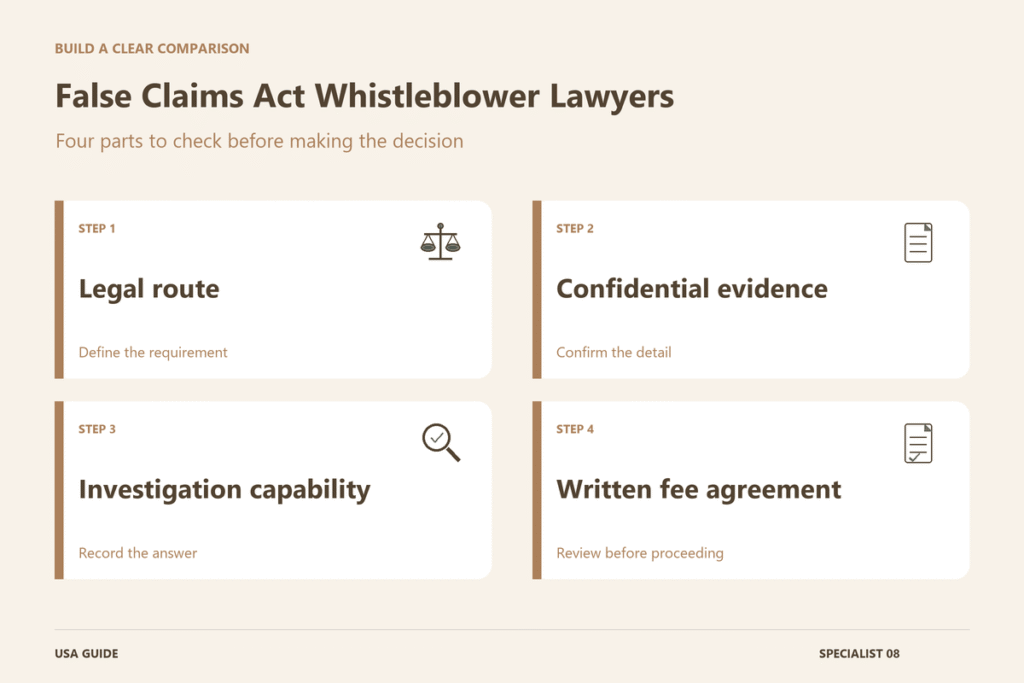
Read the fee and expense provisions carefully
Obtain the full fee agreement, including treatment of a potential award, recoverable legal fees, expenses and any separate employment work. Ask for the calculation method and whether different forms of payment affect what the client owes. Request an explanation of financial obligations if no recovery occurs or representation ends. Because individual outcomes depend on legal and factual issues, an advertised recovery from another case should not be used as a forecast of your likely award or the time required.
Compare firms on subject-matter assessment, secure handling of information, litigation resources and the clarity of their engagement. Verify lawyer licensing and clarify when representation formally begins. Ask what should happen next while the firm considers acceptance, especially if there are urgent personal or procedural issues. The strongest legal proposal may include reasons not to proceed or a recommendation for another type of advice. That is part of a careful evaluation, rather than evidence that a more confident advertiser offers a stronger case.
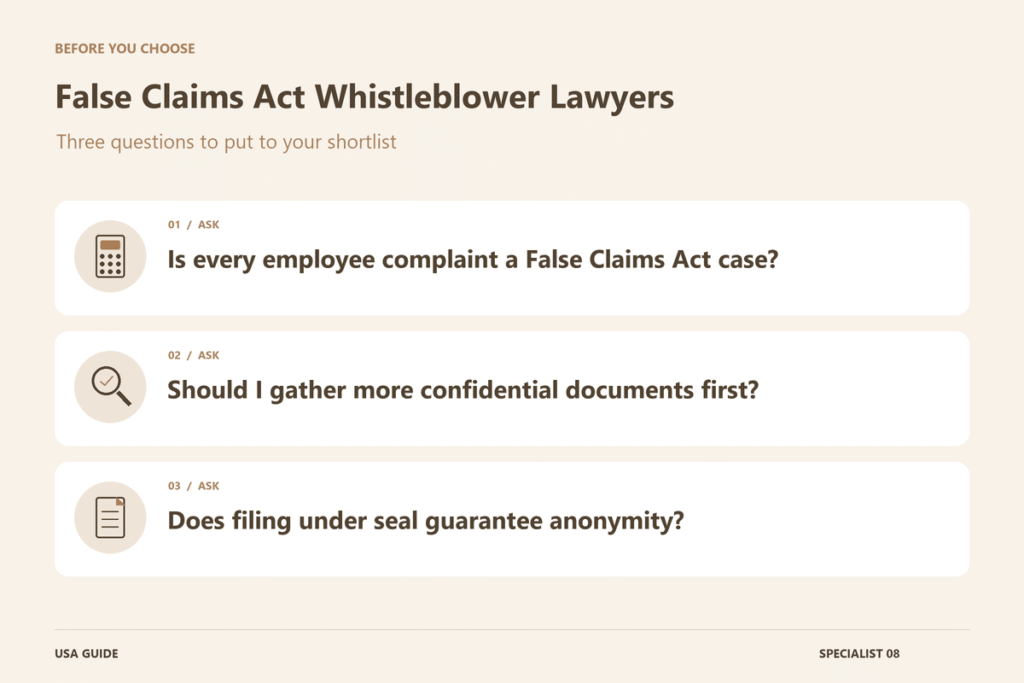
Is every employee complaint a False Claims Act case?
No. Ask a lawyer to assess the connection to government claims or obligations and the statute’s requirements. Employment mistreatment, contract disputes and other wrongdoing may need different legal routes even when the same organisation is involved.
Should I gather more confidential documents first?
Obtain legal advice about lawful access, preservation and disclosure. Do not access restricted accounts or copy information because it might strengthen a claim. Explain what exists and let counsel assess appropriate next steps.
Does filing under seal guarantee anonymity?
It should not be treated as that guarantee. Ask counsel about the seal’s purpose, the procedural obligations and possible future disclosure. Discuss employment and personal concerns separately so the proposed representation addresses them clearly.
Further reading
Related reading
- Probate Litigation Attorneys: Will Contest Fees and Representation Options (USA)
- High-Asset Divorce Attorneys: Comparing Business Valuation Costs and Retainers (USA)
- Unfair Dismissal Solicitors: Comparing Fixed Fees, Hourly Rates and Funding (England & Wales)
- Commercial Lease Dispute Solicitors: Comparing Advice, Negotiation and Litigation Costs (England & Wales)
Explore more in Business, Employment and Family Lawyers.