A will dispute is different from routine estate administration. It may require evidence about capacity, execution, influence, document history or the conduct of someone administering assets. That difference should appear in the lawyer’s proposed work and fee agreement. This US guide helps readers compare probate litigation attorneys without assuming that disappointment about an inheritance establishes a valid challenge. State-specific law, procedural status and the person’s interest in the estate need assessment before a lawyer can advise on the available options.
Identify your role and the document in dispute
Explain whether you are a beneficiary, a relative, an executor, a trustee or someone with another claimed interest. Bring copies of the will, amendments, court notices and relevant correspondence that you possess. Note whether proceedings have begun and whether papers specify a response date. Ask counsel to identify what your role permits you to do and whether the proposed representation is personal or in a fiduciary capacity. Those are different relationships and can carry different obligations.
Create a chronology of the disputed document and the surrounding events. Include known signing dates, earlier versions, changes in health, relevant communications and the people involved. Separate observations from assumptions about motive. An attorney should explain which facts may support a recognised legal issue and what further evidence is needed. A significant departure from an earlier estate plan can justify questions, but it does not allow a lawyer to skip the legal and evidential analysis required in the relevant jurisdiction.
Compare investigation before litigation promises
Ask what the initial review would involve and whether there is a sensible sequence for obtaining information. Drafting records, witness evidence and medical material may be relevant, subject to lawful access and applicable privilege. Find out who seeks those records and how the attorney decides whether an expert opinion is justified. A proposal should distinguish investigation of a potentially disputed will from the ongoing work of locating assets, paying legitimate estate expenses and carrying out administration.
Consider who else may have an interest. Several beneficiaries may want similar outcomes while disagreeing on strategy or cost. Ask whether joint representation is appropriate, how conflicts would be addressed and what happens if interests diverge. If a lawyer already acts for the estate or another family member, clarify whom that lawyer represents before sharing confidential information. The fact that professional fees are being paid from an estate does not necessarily mean the professional advises every beneficiary personally.
Understand who pays and when
Request the billing basis, initial retainer and likely expense categories. Probate litigation may be offered hourly, through limited stages or under other arrangements where permitted and suitable; do not assume contingency funding is available. Ask whether the client is personally responsible, whether any reimbursement might be sought and how uncertain cost recovery will be described. A potential court order concerning costs should not be treated as a promise that the estate or another party will pay all your bills.
Have counsel explain the financial implications of the proposed strategy. Expert review, depositions, document production and contested hearings can increase expense substantially. Ask for phase estimates and decision points so you can reassess after new evidence arrives. Where a settlement is considered, request a clear comparison of the practical outcomes, remaining uncertainty and costs still to be incurred. The attorney should investigate legal consequences of any relevant will provisions rather than making broad assurances about the risk of bringing a challenge.

Judge experience in the relevant court
Look for familiarity with the probate procedure and litigation tasks your matter actually requires. A lawyer may regularly prepare wills yet handle few contested estate proceedings. Ask who would conduct examination of witnesses, manage experts and appear where necessary. If assets or proceedings exist in more than one state, discuss coordination and additional counsel. The firm’s proposed staffing should connect to those needs, with a named person responsible for routine questions and important decisions.
Keep an organised record of each consultation, the work offered and the assumptions behind its budget. Verify professional standing and obtain written confirmation of acceptance. Respond promptly to official notices and seek advice about any deadlines rather than relying on a general timetable online. A credible proposal identifies the evidence needed to assess a challenge and the point at which pursuing it may no longer be proportionate. That candour is more valuable than a promise to overturn a will before the file has been reviewed.
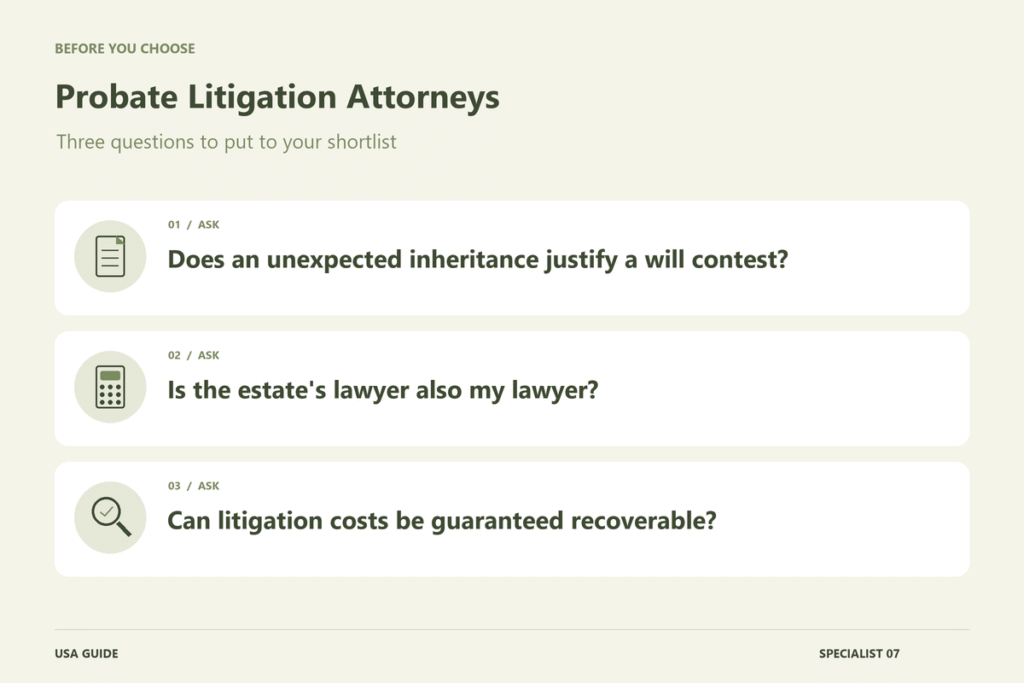
Does an unexpected inheritance justify a will contest?
Unexpected distribution alone does not establish a legal ground. Ask counsel to assess the applicable grounds, your ability to bring the matter and the evidence. The consultation should distinguish unfairness as you perceive it from a claim recognised by law.
Is the estate’s lawyer also my lawyer?
Do not assume that relationship. Ask whom the lawyer represents and whether you need independent advice. A beneficiary, executor and estate can have different interests even where everyone is discussing the same assets and documents.
Can litigation costs be guaranteed recoverable?
Treat reimbursement as a legal question requiring case-specific advice. Ask who owes invoices while proceedings continue and what could happen under different outcomes. Budget on the actual agreement rather than an optimistic assumption about a later costs decision.
Further reading
Related reading
- High-Asset Divorce Attorneys: Comparing Business Valuation Costs and Retainers (USA)
- False Claims Act Whistleblower Lawyers: Comparing Experience and Fee Agreements (USA)
- Unfair Dismissal Solicitors: Comparing Fixed Fees, Hourly Rates and Funding (England & Wales)
- Commercial Lease Dispute Solicitors: Comparing Advice, Negotiation and Litigation Costs (England & Wales)
Explore more in Business, Employment and Family Lawyers.