Mixed-use property combines commercial and residential elements, which can complicate valuation, underwriting and legal review. A shop with a flat above it may not be assessed like a wholly commercial building or a standard home. UK borrowers comparing finance should describe the actual use and occupation before comparing rates. This guide concerns the structure of a purchasing decision. It does not determine whether a proposed loan is regulated, value a property or recommend a lender; those questions require the transaction’s facts and appropriate professional advice.
Describe every part of the property
Provide floor plans, title information, leases and a clear description of residential and commercial occupation. Identify who uses each area and whether ownership or access arrangements differ. Explain intended changes, vacancies and any owner occupation. Regulatory and lending classifications can depend on more than a marketing description such as semi-commercial. Ask the broker and solicitor to assess the actual facts. Do not assume that a lender’s product name resolves all questions about the protections and requirements applying to the borrowing.
Ask which types of commercial use and residential tenancy the lender accepts. A restaurant, office, workshop and retail unit can raise different valuation or insurance issues. Identify shared services, repair responsibilities and restrictions in leases or planning documents. If the borrower intends to trade from part of the property, explain the operating business and relationship with the property-owning entity. The lender needs a coherent picture of both the security and the income or business activity proposed to support repayment.
Compare valuation and deposit assumptions
Request the valuation basis and how it affects the maximum advance. A price agreed with the seller is not a guarantee of the lender’s assessed value. Ask whether vacant parts, lease duration, tenant strength or required works could change the terms. Record the deposit and any reserves using the same purchase assumptions for each proposal. A quote based on an optimistic initial valuation may produce a larger cash requirement after inspection, so include a plan for that possibility before committing to the purchase.
Itemise valuation, lender legal work, borrower legal work, broker fees and arrangement charges. Ask which are payable before approval and what may be refunded if the transaction does not proceed. A mixed-use property can require specialist reports or additional investigation, but those costs should be explained in context. Have the solicitor identify title, access or lease questions early. Finance and conveyancing need to progress together rather than treating a lending indication as evidence that the property has already passed legal review.
Examine income assessment and repayment
Ask how rental income, business profits or other resources are assessed for the proposed structure. Identify assumptions about occupied units, rent collection and future leases. Prepare your own forecast including voids, repairs, insurance and costs shared between commercial and residential areas. The lender’s affordability measure may not reflect every operational expense. Compare the actual payment schedule, including amortisation, rate changes or any balance due at the end. A small initial payment can conceal a later refinancing requirement.
Discuss the consequences of tenant departure, changes of use or work affecting part of the building. Ask whether the facility requires consent and how reduced income might affect compliance. If the loan relies on refinancing later, seek advice on that exit without assuming a lender will accept the same property and tenancy conditions in future. Model an adverse period with lower income or higher financing cost. The purpose is to test resilience of the arrangement, rather than simply obtain the highest available advance.
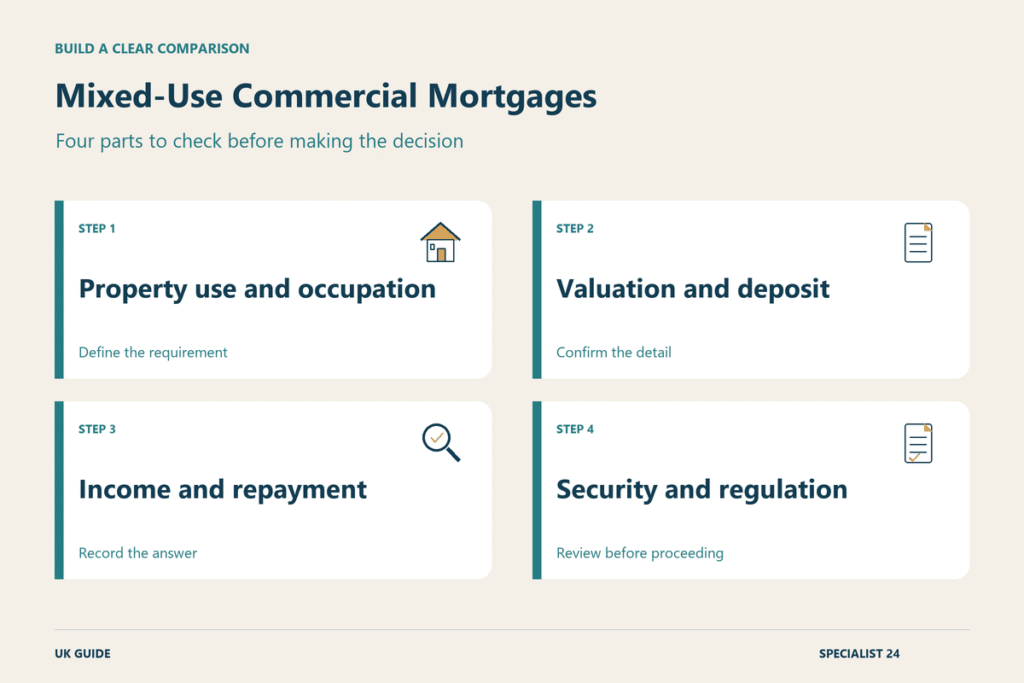
Review security, permissions and adviser roles
Have independent legal advice on charges, guarantees and any obligations involving an operating business or other properties. Ask the intermediary to identify its role, lender access and remuneration. Confirm relevant permissions where applicable and request a clear explanation of regulatory treatment. The FCA’s mortgage guidance discusses mixed-use cases, but applying it requires the actual occupancy and lending circumstances. A commercial description should not be used as a shortcut around that assessment or as a blanket statement about available consumer protections.
Compare proposals with a common property summary, income forecast and planned holding period. Include total cash required, approval conditions, repayment risk and exit charges alongside the rate. Reconcile final documentation with the agreed structure and retain professional advice on important classifications. The right arrangement should accommodate the way the property will actually be occupied and managed. It should leave the borrower clear about obligations if a tenant leaves or a planned change fails, rather than relying on a convenient label for a complex building.
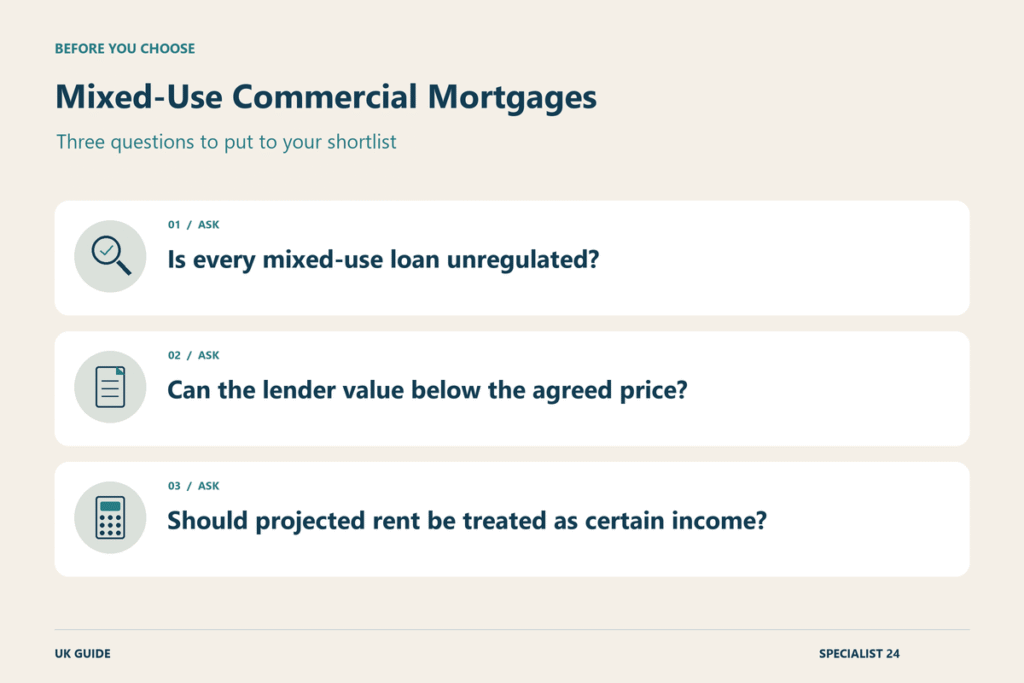
Is every mixed-use loan unregulated?
No blanket assumption is appropriate. Regulatory treatment can depend on the borrower, use, occupation and other facts. Ask qualified advisers to explain the position for the proposed transaction rather than inferring it from a product label.
Can the lender value below the agreed price?
Yes, a purchase price and lending valuation are different assessments. Ask what a lower valuation would do to the advance and your cash contribution. Avoid committing on the assumption that the first quote’s value will be confirmed.
Should projected rent be treated as certain income?
No. Distinguish existing contractual income from forecasts and include voids, collection risk and property expenses. Assess whether the borrowing remains manageable if part of the building is temporarily vacant or a planned letting takes longer.
Further reading
Related reading
- Expat Mortgages for UK Property: Comparing Currency Requirements and Lender Charges (UK)
- Non-QM Mortgages for Self-Employed Borrowers: Comparing Bank Statement Loan Offers (USA)
- DSCR Rental Property Loans: Comparing Rental Income Tests, Rates and Prepayment Terms (USA)
- Physician Mortgage Loans: Comparing Down Payments, Mortgage Insurance and Lender Fees (USA)
Explore more in Specialist Mortgages.