
Spinal fusion estimates can differ substantially because the operation’s extent, approach, implants and supporting care differ. A general surgery price is not an adequate basis for comparing two patients’ treatment or two surgeons’ proposals. This guide helps US patients organise cost questions after a specialist assessment. It does not recommend surgery, identify the source of pain or decide which technique is appropriate. The clinical team should explain the diagnosis, alternatives, expected benefits and material risks before a financial package is treated as a treatment choice.
Clarify the proposed operation
Ask the surgeon to describe the condition being addressed, the spinal region and the planned extent of surgery in understandable terms. Identify other procedures proposed alongside fusion and why they are included. The American Academy of Orthopaedic Surgeons describes different approaches and techniques, with the appropriate operation depending on the problem. A quote should therefore relate to your assessed plan. Do not compare a limited procedure with a more extensive operation as though the price difference simply reflects hospital quality or the surgeon’s reputation.

Discuss the reasonable alternatives and what further assessment is needed. Ask which findings could change the recommendation and whether another specialist opinion would help resolve uncertainty. Provide a complete health and treatment history and follow clinical instructions about preparation. The financial discussion should not compress a complex decision into a short-lived booking offer. Understanding the plan, its limitations and the expected care pathway makes it easier to ask meaningful questions about estimates rather than focusing on a single number without clinical context.
Identify each billing organisation
Request estimates for surgeon, hospital, anaesthesia and other expected professional services. Ask about imaging, implants, graft materials and monitoring where proposed, including how they appear in the hospital’s charges. The name of a package does not establish that all providers participate in it. Have the billing team identify who can supply each estimate. A useful comparison reconciles the separate expected charges instead of allowing a facility fee or specialist service to remain invisible until after the operation.
Ask which assumptions the estimate makes about procedure duration, hospital stay and postoperative care. Identify the financial arrangements if additional care is needed or the plan changes. No package can guarantee that a patient’s clinical course will follow the original estimate. For uninsured or self-pay care, ask about applicable good faith estimates and their scope. Keep written information from each participating organisation and clarify whether separately scheduled assessment or rehabilitation is included rather than assuming one estimate covers the whole episode.
Compare insurance treatment of the plan
Ask your insurer about authorisation, medical necessity review, network participation and the expected patient share for the proposed care. Provide the actual planned procedure information through the clinical and billing teams. A clinician accepting an insurance card does not establish that every facility or professional service will receive in-network treatment. Request an explanation of likely deductibles, coinsurance or limits and what happens if the surgical plan changes. Retain reference numbers and written responses while recognising that estimates remain subject to plan terms and claim details.
If a different facility or surgeon is suggested on financial grounds, discuss the clinical and practical implications with appropriate professionals. Do not assume a lower insurance estimate proves equivalent treatment, staffing or follow-up. Ask the insurer and provider to clarify the actual proposed services. The purpose is an informed comparison of suitable options, not a decision driven only by the lowest anticipated personal balance. If information conflicts, seek clarification before scheduling rather than relying on an informal assurance from one part of the care team.
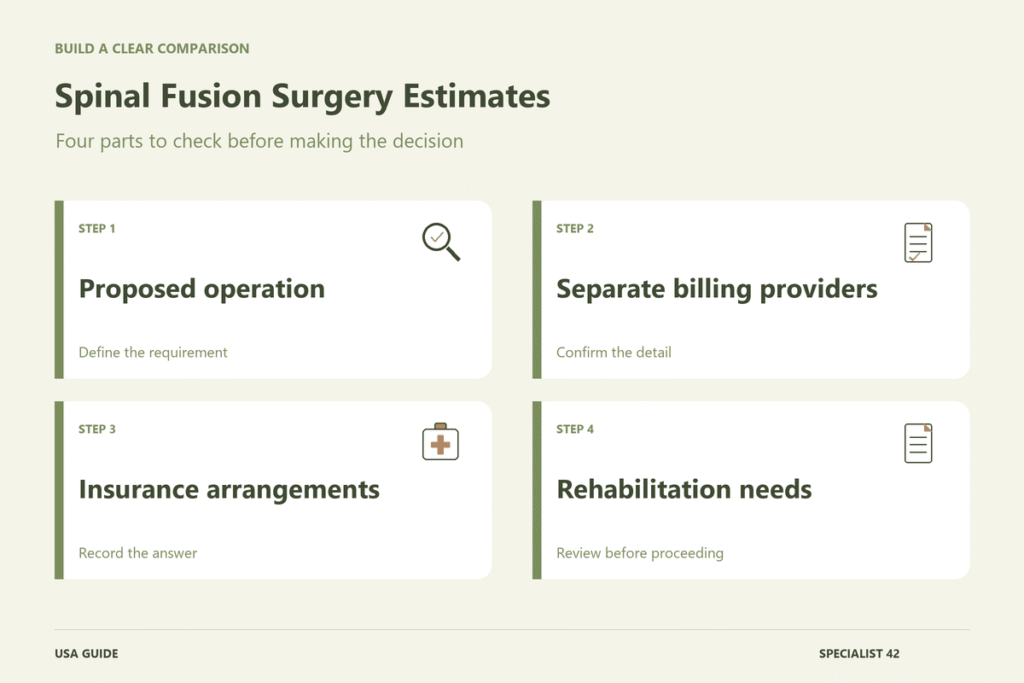
Include rehabilitation and household needs
Ask what postoperative reviews, rehabilitation, equipment or home support may be recommended and who arranges them. Obtain individual advice about activity, work and recovery; general timelines cannot determine what will be appropriate for you. Identify the costs and insurance treatment of planned services beyond discharge. Practical expenses such as transport, time off work and help at home can affect affordability even when the hospital estimate is clear. Include them in your own planning while keeping clinical instructions with the treating team’s care plan.
Compare proposals using the same assessed operation and a full list of participating services. Verify relevant credentials and ask how experience and outcomes are discussed without a personal guarantee. Request payment and cancellation terms if self-funding, and review credit separately from treatment consent. A responsible estimate explains what it includes, what remains uncertain and whom to contact as the plan develops. The most useful comparison supports a carefully considered clinical decision, rather than treating fusion as a standard product whose value can be judged from an advertised price alone.
Is every spinal fusion estimate for equivalent surgery?
No. Region, extent, approach and associated procedures can differ. Ask for the clinical plan and its purpose before comparing fees. A lower total may reflect less or different work rather than a direct saving on the same treatment.
Are implants always included in a quoted package?
Check the written scope with the hospital and surgeon. Ask how planned materials are billed and what could change the estimate. A general description of surgery should not be assumed to settle every implant or supporting-service charge.
Should the budget end at hospital discharge?
No. Discuss planned reviews, rehabilitation and practical support, then identify their costs and coverage. Your own recovery plan may involve services outside the original hospital package, and those should be understood before the financial decision is complete.
Further reading
Related reading
- Bariatric Surgery Packages: Comparing Hospital Fees, Follow-Up Care and Financing (USA)
- Robotic Prostate Surgery Costs: Comparing Hospital Quotes and Insurance Coverage (USA)
- Private Hip Replacement Packages: Comparing Implant Options, Hospital Fees and Rehabilitation (UK)
- Private Hernia Repair Quotes: Comparing Surgeon Fees, Anaesthesia and Aftercare (UK)
Explore more in Private Hospitals and Surgery.