Cyber liability insurance quotes can look similar while transferring very different risks. A premium and a headline limit do not reveal whether a policy responds to the event your business is worried about, which specialists you may use or how much of a loss remains yours. This guide helps US businesses organise a comparison of proposed cover. It does not recommend a particular insurer or establish that a future incident will be covered. The policy, endorsements and facts of a claim determine the response.
Describe the systems and dependencies being insured
Prepare a consistent description of the business for every broker or insurer. Include operations, revenue, sensitive information handled, major service providers and how critical systems support income. Identify outsourced payment, hosting, email and other dependencies. Explain which security controls are actually implemented, rather than selecting answers that appear likely to obtain a cheaper quote. If an application question is unclear, request clarification and keep the response. Accurate underwriting information matters more than a polished summary that conceals operational gaps.
Build several incident scenarios before reviewing proposals. Examples might include ransomware affecting your own systems, an outage at a cloud supplier or an employee being deceived into sending money. For each, list possible business consequences without assuming they belong under the same coverage section. The NAIC notes that ransomware, social engineering and funds transfer fraud can receive different treatment across policies. Ask the broker to identify the relevant wording and explain where another policy, such as crime insurance, might be needed.
Compare ransomware response and recovery provisions
Ask which costs may fall within incident response, restoration, legal advice, notification or interruption cover. Identify whether extortion-related coverage is offered and what consent, legal restrictions or specialist involvement may apply. Purchasing a policy is not a decision to pay an attacker, nor an assurance that payment is lawful or useful. The business still needs its own response plan and appropriate professional advice. An insurance proposal should explain the financial terms without presenting ransom payment as the default solution.
Check how a covered interruption is measured. Ask about waiting periods, restoration assumptions, dependent service providers and the evidence required to demonstrate lost income or additional expense. Clarify whether a non-malicious outage is treated differently from an attack. Two policies with the same overall limit can offer different sublimits or periods of cover. Record those details alongside the operational scenario, so the comparison reflects the business’s ability to continue trading rather than simply the largest number on the schedule.
Read retentions, exclusions and consent rules together
Request the deductible or retention for each relevant section and whether a percentage contribution can also apply. Ask how separate sublimits interact with the aggregate limit and whether response expenses reduce the remaining amount. Identify exclusions relevant to your operations and seek an explanation of any security obligations or conditions. Avoid relying on a verbal assurance that a broad cyber label covers everything. Have the broker point to the proposed wording and provide written clarification where the application or endorsement is ambiguous.
Operational access to help matters too. Ask how an incident is reported, whether support is available outside business hours and when insurer consent is required before engaging advisers or incurring costs. Review the approved response panel and any option to use existing legal or technical providers. Test the reporting arrangements in a tabletop exercise after cover is placed. The aim is to know whom to contact during an incident, rather than discovering that a familiar supplier is not authorised under the policy.
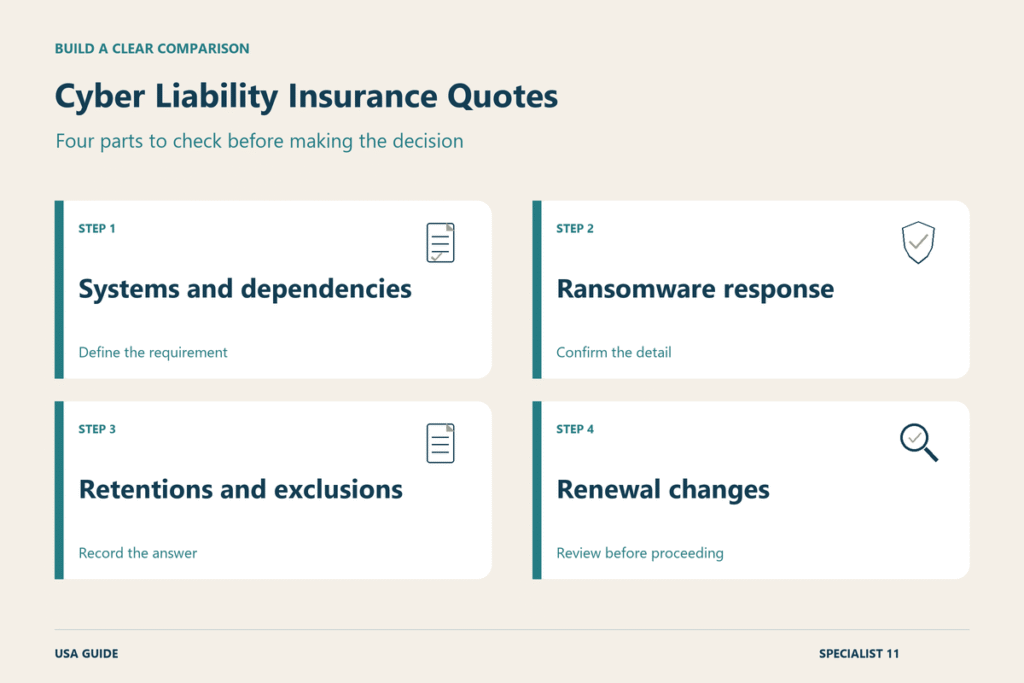
Evaluate renewal and contract changes
Ask how acquisitions, new services, substantial revenue changes and different data handling would be notified during the policy period. Review proposed continuity and prior-event provisions with the broker when changing insurers. A lower renewal premium may accompany narrower terms, changed retentions or a different response panel. Keep the outgoing wording and compare amendments explicitly. Do not assume that an unchanged policy name or familiar insurer logo means that the protection is identical from one year to the next.
Use a comparison sheet containing premium, taxes and fees, key scenarios, retentions, sublimits, reporting requirements and unanswered questions. Confirm the insurer and intermediary details through appropriate state resources. Before binding, reconcile the final schedule with the proposal you assessed and retain the submitted application. Cyber insurance can support financial recovery from certain events; it does not replace access controls, backups, staff preparation or tested recovery. A strong purchasing decision aligns policy wording with the business’s actual systems and response arrangements.
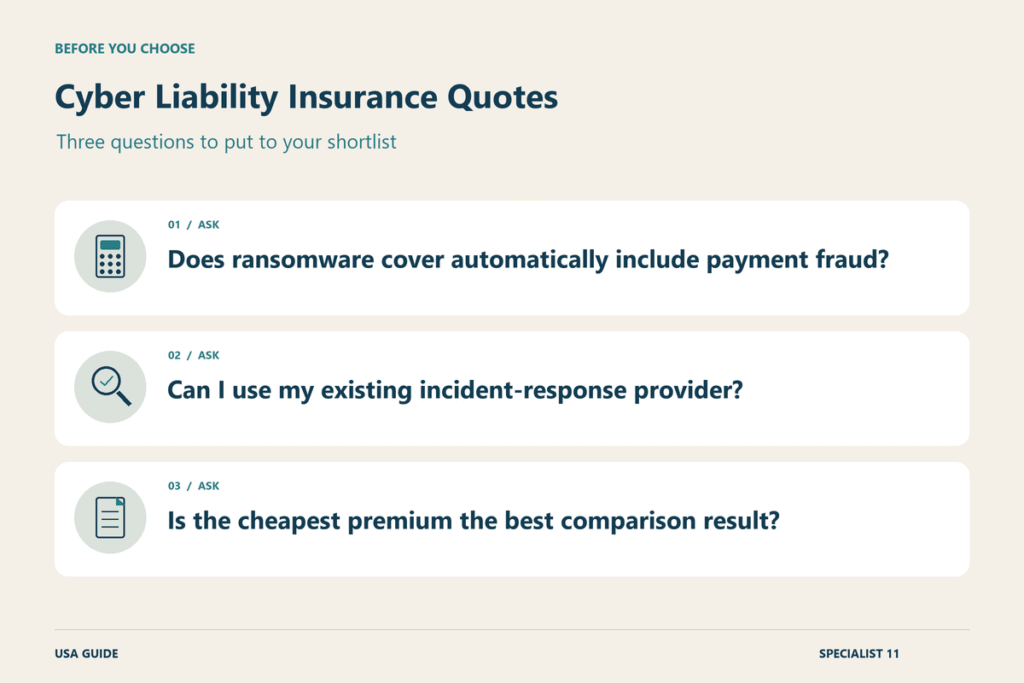
Does ransomware cover automatically include payment fraud?
No such assumption should be made. Ask where social engineering and funds transfer losses are addressed, including any separate crime policy, sublimit or exclusion. Compare the wording for the specific scenario rather than relying on the broad name of the insurance product.
Can I use my existing incident-response provider?
Ask before an incident occurs. The policy may require panel providers or insurer consent. Record the approval process and contact details so procurement preferences do not conflict with policy conditions when urgent technical or legal assistance is needed.
Is the cheapest premium the best comparison result?
Premium should be assessed with limits, retained loss, exclusions and practical response arrangements. A lower price may be appropriate, but only after the business understands what has changed and which risks it will continue to fund itself.
Further reading
Related reading
- Directors and Officers Insurance: Comparing Defence Costs and Policy Limits (USA)
- Product Liability Insurance for Manufacturers: Comparing Recall Exclusions and Coverage (USA)
- Key Person Insurance for Limited Companies: Comparing Premiums and Policy Structures (UK)
- Warehouse Insurance Quotes: Comparing Buildings, Stock and Business Interruption Cover (UK)
Explore more in Specialist Business Insurance.