Key person insurance is intended to help a business address the financial consequences of losing an important person’s services under the events covered by the policy. It is not interchangeable with insurance intended for a family or a shareholder purchase. A UK limited company comparing proposals needs to define the business purpose before selecting a premium. This guide explains the questions to discuss with an appropriately qualified adviser. It does not recommend a sum assured or determine the tax treatment of a particular arrangement.
Identify the business dependency
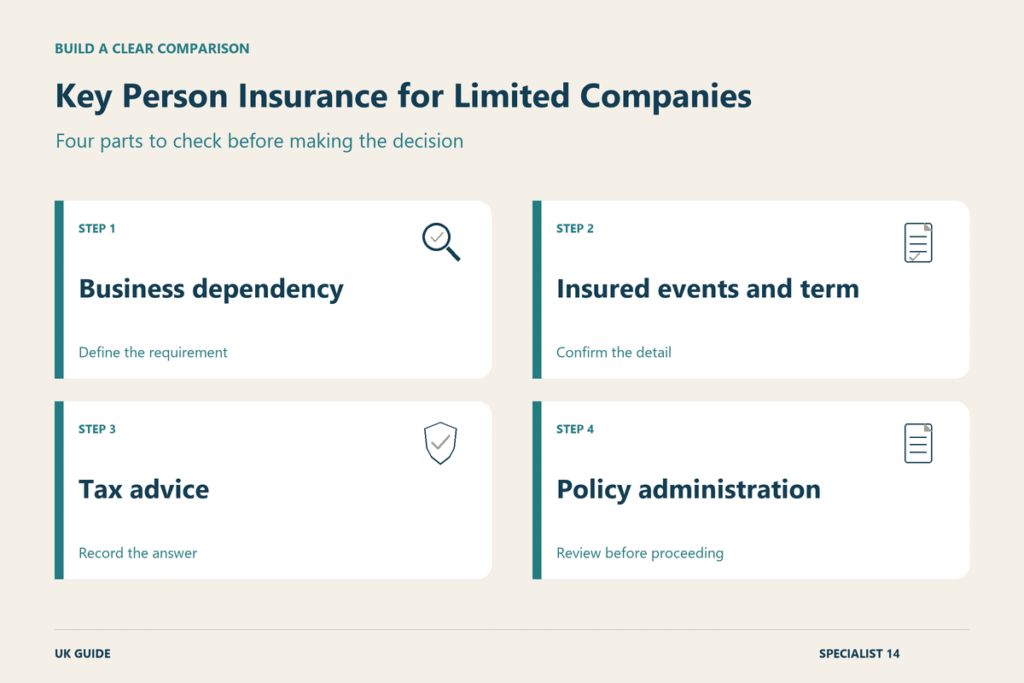
Consider which individual creates a material dependency and why. The issue might involve specialist knowledge, revenue relationships, leadership, replacement time or a combination of factors. Write down the operational consequences if that person’s services become unavailable. Separate a temporary disruption from the permanent loss of a role, and consider existing succession or recruitment plans. This analysis gives the adviser a more useful starting point than applying a multiple of salary without explaining what financial loss the company is trying to address.
Describe the intended use of any proceeds. A company may be concerned about recruitment costs, disruption to income or an outstanding financial commitment, but different objectives can call for different structures. Ask the adviser to distinguish key person protection from shareholder protection, business loan protection and personal life cover. Ownership, insured person and beneficiary arrangements need to match the purpose. A policy chosen for the wrong objective may provide a payment without solving the business problem originally identified.
Compare the insured events and term
Ask whether the proposal covers death only, includes specified critical illness, or addresses another defined event. Read the relevant definitions, exclusions and evidence requirements rather than treating the names of products as equivalent. The ability to work, a diagnosis and a policy-defined condition can be different tests. Have the adviser explain the proposed trigger in clear language. A broader-sounding label should not replace consideration of which events are actually insured and how they relate to the company’s dependency.
Review the duration of cover against the expected need. A fixed period may need reassessment if the business changes, a key person approaches departure or a replacement becomes available. Ask about premium guarantees, reviewable terms and options if circumstances change. Underwriting can affect the final offer, so distinguish an illustrative quote from accepted terms. If medical information is requested, ask how the process is managed and ensure the person concerned receives appropriate information about privacy and consent.
Discuss taxation without assuming a standard answer
HMRC’s guidance describes conditions relevant to the deductibility of key person premiums, including the purpose and structure of the policy. That does not justify a blanket promise that all premiums are deductible or all proceeds receive one treatment. Ask an accountant or tax adviser to review the actual arrangement, its purpose and the company’s circumstances. Record the reasoning before placement. A broker’s premium illustration and a tax conclusion are different pieces of advice and should not be confused.
Compare policy proposals using the same insured person, purpose, term, benefit structure and underwriting assumptions. Identify additional fees and whether advice is included. Where a medical or occupational factor changes terms, ask for a clear explanation of the revised cover rather than comparing the original headline premium with a different final policy. A cheaper offer may reflect narrower definitions or different guarantees. The useful question is whether the company understands and accepts those differences for the need it has identified.
Plan ownership and future administration
Confirm the policyholder, premium payer and intended recipient of proceeds with professional advisers. Review any relationship with lending or shareholder agreements. Ask who keeps records, monitors premiums and informs the insurer about changes where required. If the insured person leaves, the company restructures or the dependency falls, reassess the arrangement. Continuing to pay for an old structure without review can leave the business with cover that no longer matches its actual financial exposure or commercial priorities.
Present the purchasing decision as a documented business plan: the dependency, the financial purpose, the chosen events, duration, tax advice and review triggers. Check the insurer and intermediary through appropriate regulatory resources. Keep the final policy and application with the company’s records, and make sure the right people know where to find them. Insurance can supply financial support for a covered event, while succession, delegated knowledge and continuity planning address the practical work of keeping the business operating.
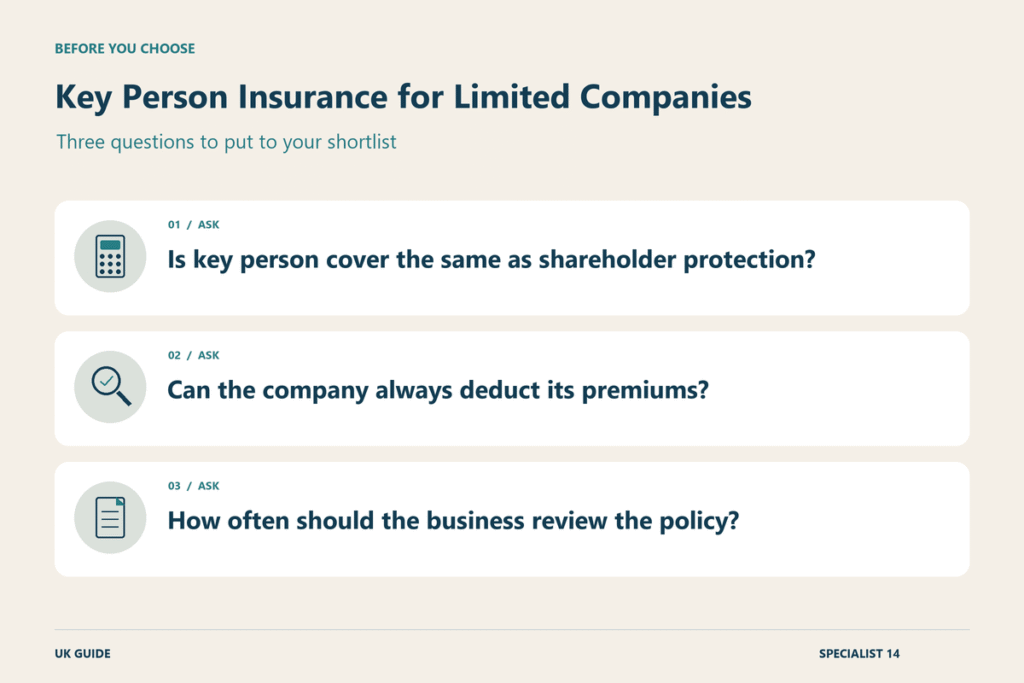
Is key person cover the same as shareholder protection?
They can serve different purposes and use different structures. Ask whether the objective is replacing business income, addressing a financial commitment or enabling an ownership transaction. The policy and associated agreements should be designed around the actual purpose.
Can the company always deduct its premiums?
Do not assume so. HMRC guidance makes the purpose and structure relevant, and individual circumstances require professional review. Ask the company’s tax adviser to explain the treatment of both premiums and possible proceeds for the proposed arrangement.
How often should the business review the policy?
Review it when the key person’s role, ownership, financial dependency or business structure changes, and as part of routine financial planning. Ask whether a change requires insurer notification or a different arrangement rather than simply renewing unchanged cover.
Further reading
- HMRC: Insurance for employees and other key persons
- HMRC: Key person insurance and non-trade purposes
Related reading
- Warehouse Insurance Quotes: Comparing Buildings, Stock and Business Interruption Cover (UK)
- Product Liability Insurance for Manufacturers: Comparing Recall Exclusions and Coverage (USA)
- Directors and Officers Insurance: Comparing Defence Costs and Policy Limits (USA)
- Cyber Liability Insurance Quotes: Comparing Ransomware Cover, Exclusions and Deductibles (USA)
Explore more in Specialist Business Insurance.