A manufacturer’s product liability quote should be assessed against what the business makes, where products go and what could happen after they leave its control. The annual premium is only one part of that assessment. Coverage territory, contractual obligations and recall-related expenses can create important differences between proposals. This guide helps US manufacturers prepare questions for their insurance advisers. It does not determine whether a particular defect, injury, recall or customer demand would be covered by an existing or proposed policy.
Describe the product chain accurately
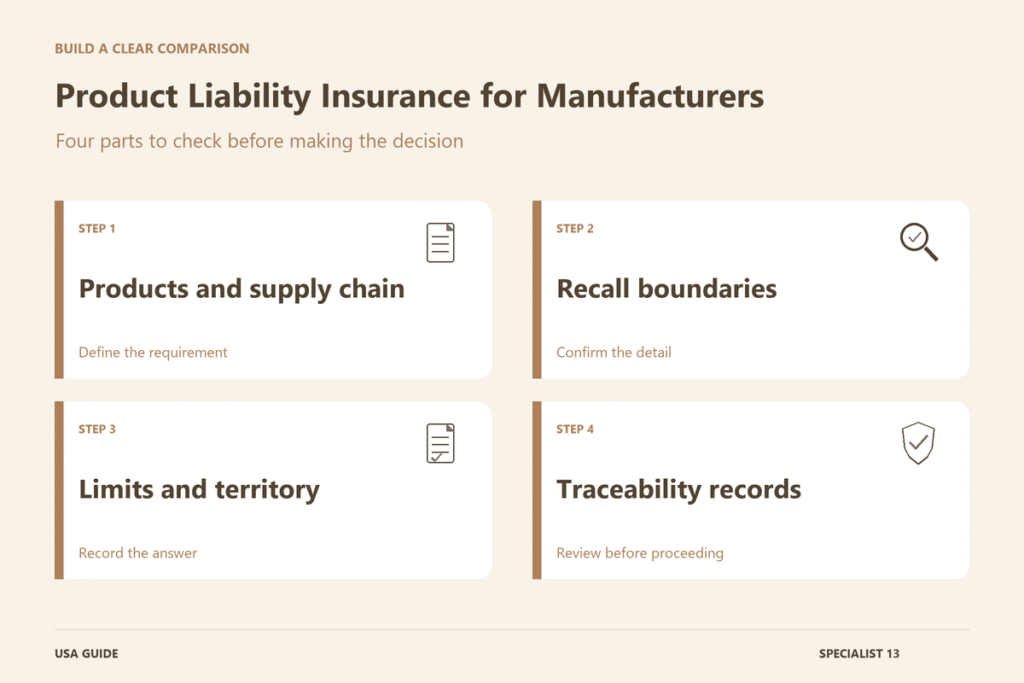
Provide a clear product list, intended uses, sales destinations and the business’s role in design, manufacture, assembly and distribution. Identify components purchased from others and products sold under another organisation’s brand. Explain any safety-critical applications, online sales or exports. Brokers and insurers need those facts to assess the risk; a generic manufacturing description may conceal the activity that matters most. Keep a copy of the information supplied and ask how changes to the product range should be reported.
Map contractual obligations alongside operations. Customers, distributors and landlords may request particular insurance terms, but a certificate alone does not explain the protection actually provided. Ask your adviser to review important indemnities, additional insured requests and limits in the context of the available wording. A contractual promise made by the manufacturer can extend beyond the risks the insurer agrees to cover. Identifying that difference before signing a supply agreement is more useful than discovering it when a customer seeks reimbursement.
Separate liability from product replacement and recall
Ask which proposed coverage addresses injury or property damage attributed to a product and how the relevant exclusions operate. Then ask separately about the product itself, replacement, withdrawal, disposal and associated recall work. Do not assume that a policy described as product liability will fund every cost of correcting a faulty batch. The business may need a separate recall discussion or may choose to retain some costs. Have the adviser explain the boundaries using a scenario drawn from your actual production and distribution process.
Consider the consequences beyond retrieving stock. A recall can involve identifying affected batches, contacting distributors, transporting material, investigating the cause and restoring operations. Ask which of those costs are addressed in the proposed arrangements and which trigger, consent or sublimit applies. A voluntary quality correction and an event meeting a policy’s recall definition may be treated differently. Avoid using the word recall as a substitute for reading those conditions; the business needs a workable plan for incidents that fall outside insurance as well.
Compare limits, territory and defence arrangements
Record per-event and aggregate limits, deductibles or retentions and the treatment of defence costs. Ask how multiple claims involving the same design or batch could be grouped. Explain where products are sold and used, including onward distribution that you know about. The geographical scope of sales is not necessarily identical to the policy’s jurisdiction or territory wording. If the business enters a new market, seek advice before assuming that an existing domestic programme automatically provides the desired protection there.
Ask how an allegation should be reported, who appoints defence counsel and what approval is needed before making admissions, replacing products or agreeing payments. The business may need to take urgent safety measures while preserving information and complying with legal obligations. Establish a response process with appropriate professional input rather than treating insurer consent as the only consideration. Insurance, regulatory duties and product safety decisions can interact without being the same responsibility or being handled by the same organisation.
Test traceability and evidence expectations
Discuss how batch records, quality checks, complaints and supplier documents would be retained and retrieved. An insurance application may ask about these systems; answer based on actual practice. Ask whether the proposal includes risk-engineering support or expects specified controls. A manufacturer should understand the operational commitments it makes when seeking cover. If it cannot demonstrate which customers received an affected item, both its response costs and its ability to investigate an allegation can become harder to manage.
Compare proposals using a common product scenario, the same sales information and a list of contractual requirements. Include all quoted taxes and intermediary fees, but do not reduce the decision to premium alone. Verify final endorsements, declarations and product descriptions before binding. Ask the adviser to document important retained risks, particularly recall and supply-chain exposures. A useful programme aligns the wording with the manufacturing operation and leaves the business with a clear plan for costs that insurance has not agreed to absorb.
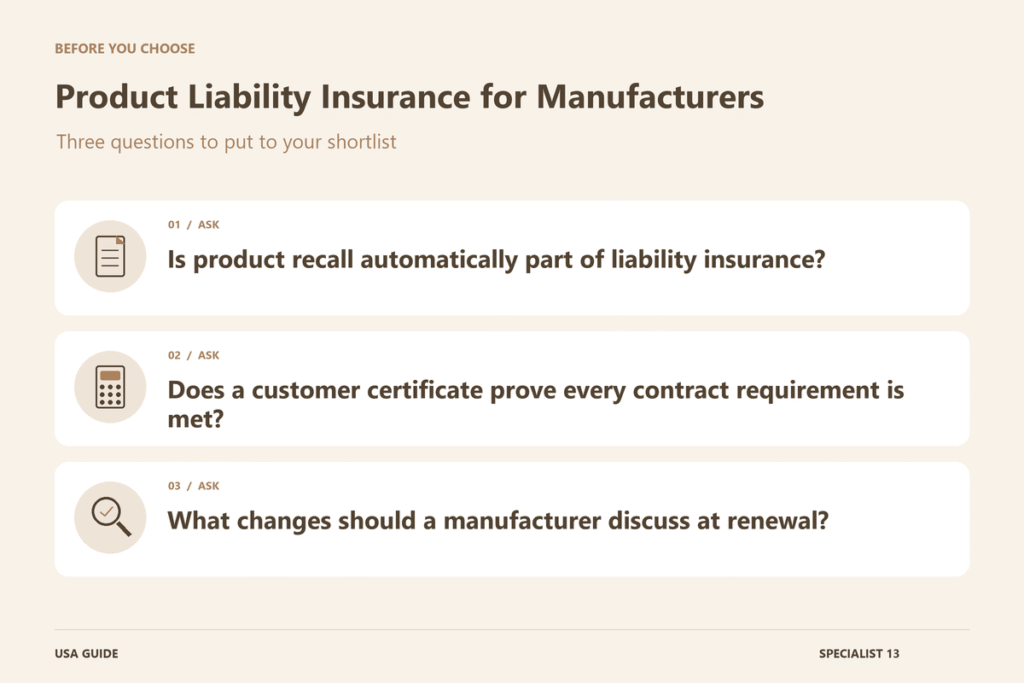
Is product recall automatically part of liability insurance?
It should be checked separately. Ask about withdrawal, replacement, disposal and communication expenses, along with the event that triggers any cover. A product liability heading does not establish that those operational costs are included.
Does a customer certificate prove every contract requirement is met?
No. Ask the adviser to compare the actual wording and endorsements with the contract. A certificate summarises information but does not rewrite policy terms or resolve a contractual indemnity extending beyond the purchased cover.
What changes should a manufacturer discuss at renewal?
Report new products, uses, markets, processes and material contractual changes as required. Provide updated facts rather than copying an old description without checking it. Ask whether any mid-term notification is necessary before the next renewal.
Further reading
Related reading
- Directors and Officers Insurance: Comparing Defence Costs and Policy Limits (USA)
- Cyber Liability Insurance Quotes: Comparing Ransomware Cover, Exclusions and Deductibles (USA)
- Key Person Insurance for Limited Companies: Comparing Premiums and Policy Structures (UK)
- Warehouse Insurance Quotes: Comparing Buildings, Stock and Business Interruption Cover (UK)
Explore more in Specialist Business Insurance.