Auction property bridging finance should be arranged around the purchase contract, available cash and a credible repayment plan. Speed matters, but a rapid indication of interest is not the same as funds ready for completion. UK buyers comparing offers need to understand both the legal purchase commitment and the lender’s remaining conditions. This guide concerns that comparison. It does not recommend bidding, determine regulatory status or guarantee that a property can be refinanced after purchase; obtain independent advice before making a binding commitment.
Read the auction terms before arranging the bridge
Ask a solicitor to review the legal pack and the specific auction contract. Identify the deposit, completion requirements and additional purchase charges rather than relying on a general description of auction practice. Explain the intended use of the property and any known title, occupation or condition issues to the lender. The auction timetable and the lender’s process must fit the same transaction. A familiar property address and an attractive valuation do not remove legal or practical conditions that can prevent funds being released.
Prepare proof of deposit and the source of all additional cash required. Separate the purchase price from auction fees, taxes, legal costs, insurance and finance expenses. Ask the lender which costs can be included and which reduce the net advance. If the bridge retains interest or fees, the stated facility can exceed the cash paid to complete the purchase. The comparison should show the exact completion shortfall the buyer must meet, with contingency for costs still subject to confirmation.
Distinguish an indication from a completed lending process
Request a list of valuation, legal, identity, underwriting and security conditions. Ask who is responsible for each item and when work can begin. If an expedited process is advertised, clarify the assumptions and which parts remain outside the lender’s control. A promise of speed should not be treated as a guarantee that a particular auction purchase will complete. Track the outstanding conditions and discuss the consequences of delay with the purchase solicitor and financing team.
Tell the lender about intended works, occupancy and the expected exit. A property requiring significant repairs may face different lending or refinancing questions from an immediately lettable asset. Ask whether the proposed lender permits the intended work and what evidence will be needed later. A hoped-for mortgage after refurbishment is not an approval from the future lender. Review the exit independently before bidding, including whether the borrower’s income, property condition and ownership structure could satisfy the proposed longer-term arrangement.
Calculate costs for realistic holding periods
Obtain a complete schedule of interest, arrangement, exit, valuation, legal, broker and administration charges where applicable. Ask whether interest is retained, serviced or added to the balance and how early repayment is calculated. Compare short, expected and delayed holding periods using the same purchase and repayment assumptions. A monthly rate by itself can obscure the effect of fixed charges. A relatively brief loan can still be expensive if large fees apply regardless of how quickly it is repaid.
Check minimum interest, extension provisions and any default-related terms. Ask whether a fee is based on the loan amount, facility or another figure. Establish which deposits are refundable if the valuation or legal review prevents lending. Request broker remuneration and scope in writing, including what happens if the first lender declines. The buyer should understand the cost of an unsuccessful application as well as the optimistic completion scenario, particularly where an auction contract leaves limited time to find another option.

Assess the repayment risk and security
The British Business Bank describes a clear exit strategy as necessary for bridging finance. Build a plan based on evidence rather than an assumed rise in property value. If the exit is sale, consider realistic marketing and transaction times; if refinancing, obtain appropriate advice about likely requirements. Model a delay and ask what funds would cover extra costs. The possibility of extending the bridge should not replace a viable repayment plan, since approval and terms may change.
Have a solicitor explain the security, guarantees and consequences of default. Clarify regulatory treatment with qualified advisers because it can depend on the actual borrower, purpose and property use. Compare proposals on net completion funds, remaining conditions, total cost and exit resilience. Before signing, reconcile the offer with the legal documents and auction obligations. A suitable bridge is one the buyer can understand and repay on a defensible plan, rather than simply the first provider willing to discuss a fast completion.
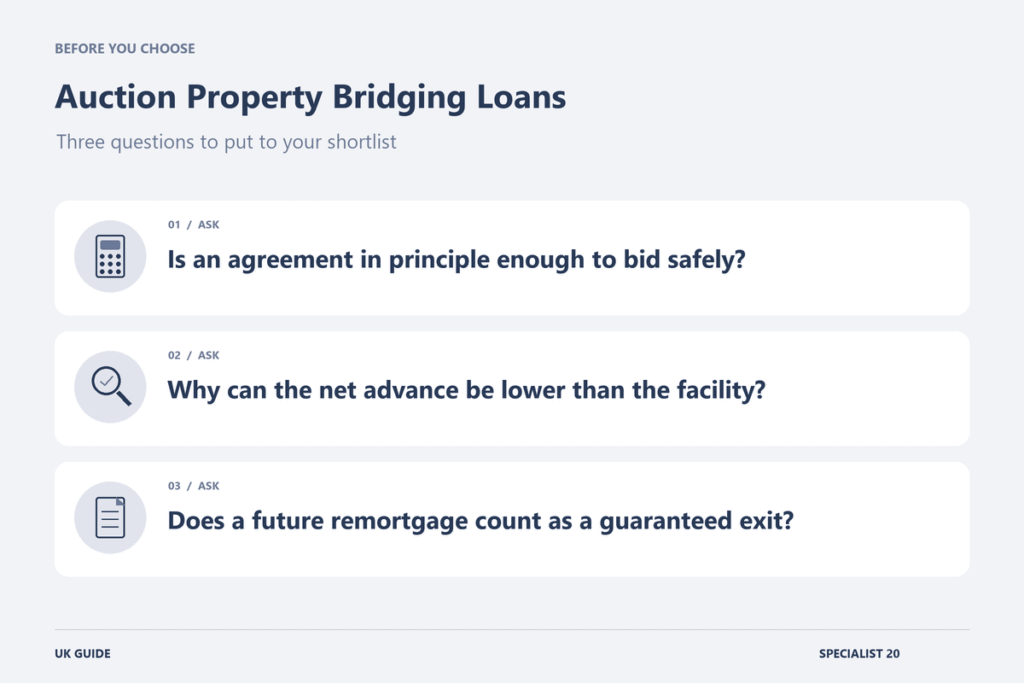
Is an agreement in principle enough to bid safely?
It is not a completion guarantee. Ask about outstanding lender conditions and obtain advice on the auction’s binding obligations. The decision to bid should account for what happens if the expected finance is unavailable or arrives late.
Why can the net advance be lower than the facility?
Retained interest, fees and other deductions may reduce the cash released. Request a completion statement showing every deduction and the buyer’s remaining cash contribution, including purchase expenses that sit outside the finance arrangement.
Does a future remortgage count as a guaranteed exit?
No. Eligibility, property condition, valuation and market terms can change. Obtain advice on the proposed refinance and model alternatives. A bridge should be evaluated with the risk that the intended next loan is delayed or unavailable.
Further reading
- British Business Bank: What is a business bridging loan?
- FCA: Mortgage Rule Review feedback and roadmap
Related reading
- Property Development Finance: Comparing Drawdown Fees, Monitoring Costs and Exit Terms (UK)
- Invoice Factoring Companies: Comparing Discount Fees, Recourse and Contract Terms (USA)
- Equipment Financing vs Leasing: Comparing Deposits, Buyout Terms and Total Cost (USA)
- SBA 504 Loan Costs: Comparing Lender Fees, Closing Expenses and Financing Structures (USA)
Explore more in Commercial Finance.