An asbestos survey and asbestos removal are different services with different purposes. Buying a low-priced inspection does not establish that it is appropriate for planned building work, and a survey result does not mean every identified material must be removed. This guide helps UK commercial property managers compare professional proposals. It is not guidance for sampling, handling or removing asbestos yourself. Applicable duties and procedures require competent advice, with the relevant regulator’s guidance for the UK nation involved. The purchasing decision should connect the building’s use and intended works to a properly scoped professional service.
Define the survey purpose
Explain how the premises are occupied and whether refurbishment, demolition or intrusive work is planned. HSE distinguishes management surveys from refurbishment or demolition surveys. Ask the surveyor which type is appropriate and why. An existing report may not cover the area or disturbance now proposed. Provide plans, previous reports and known restrictions rather than assuming a general survey label means every part of the building has been investigated. The commissioned scope should make the intended decision and required coverage clear.
Ask which areas will be accessed and how inaccessible areas or limitations are recorded. Identify the effect of occupation, equipment and restricted spaces on the work. A lower survey quote can reflect less access or a different sampling assumption. Request the practical arrangements for professional investigation, including permissions and any need to vacate areas. Do not attempt to obtain samples or expose concealed material to make the quote easier. Competent professionals should plan investigation and explain its limitations without encouraging unsafe disturbance.
Compare competence and report deliverables
Ask about relevant surveyor competence, experience, insurance and any applicable accreditation or laboratory arrangements. Verify claims through the appropriate registers rather than relying on a logo in a sales email. Request a sample report showing how locations, findings, limitations and recommendations are presented. A useful document should support the dutyholder’s next decisions and the communication of information to people who may disturb materials. The value is not the number of pages but whether the report clearly describes the surveyed building and the boundaries of the assessment.
Clarify who helps translate the findings into an appropriate management response. The presence of asbestos-containing material does not automatically require removal; condition and disturbance risk are important considerations for professional assessment. Ask which further work, monitoring or specialist advice is recommended and what falls outside the survey fee. A company selling both surveys and removal should still explain the basis for its recommendation. The building manager needs a reasoned plan rather than an assumption that every positive finding authorises a removal project.
Scope any removal work separately
Where removal or another intervention is recommended, request a defined proposal covering the material, location and intended work. Ask a competent adviser whether the activity requires a licensed contractor and what notifications or specialist arrangements apply. HSE explains that higher-risk work can require licensing, while other categories have different requirements. Do not apply one blanket rule to all materials. For Northern Ireland, check the relevant local regulator’s requirements rather than assuming every Great Britain process transfers unchanged.
Identify site setup, access, protection, waste handling, necessary assessment and reinstatement responsibilities. Ask which independent or specialist checks are required and who appoints and pays for them. The contractor should explain practical arrangements without inviting occupants to supervise technical controls themselves. Separate removal from rebuilding or making good, because a safe completion does not necessarily include restoring every finish. Compare the complete work and the building’s operational needs, including downtime, access restrictions and coordination with other contractors.
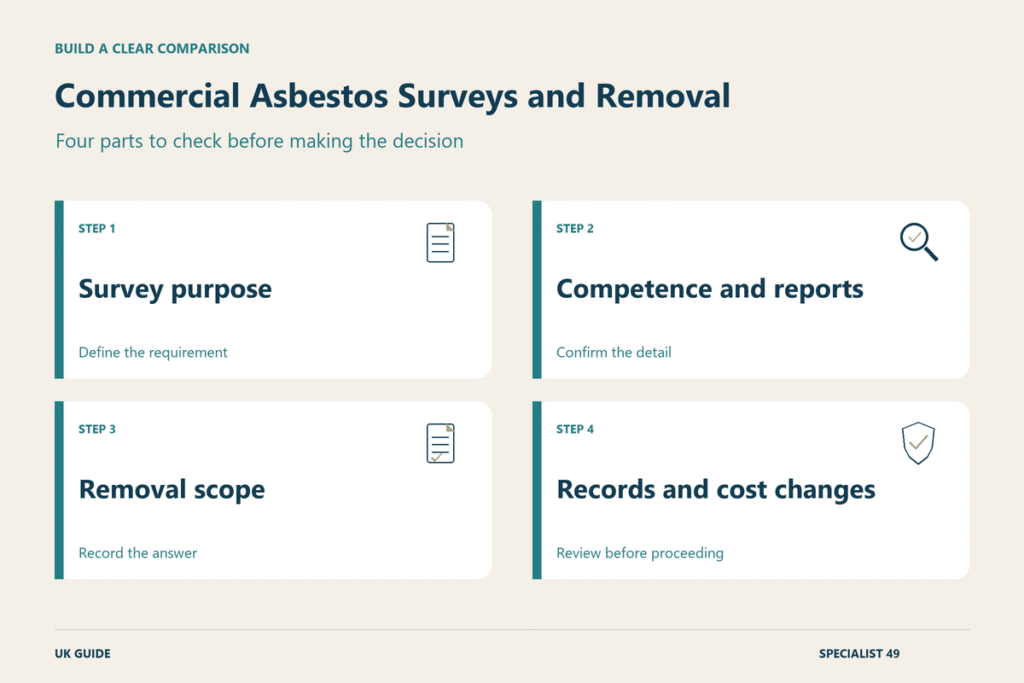
Review cost assumptions and records
Request an itemised quote for the actual survey or removal scope, including additional visits, laboratory work, disposal and reporting where relevant. Ask what changes if further material is discovered or access differs from the original assumptions. Establish a written approval process before substantial additions. Keep records of completed work and update relevant building information through appropriate professionals. Future maintenance teams need accurate information; an old invoice alone is not a substitute for a clear record of what was assessed, treated or left in place.
Compare proposals on purpose, coverage, competence, limitations, deliverables and the full cost of any follow-on work. Verify relevant professional and contractor details and coordinate with the people responsible for the premises. Avoid selecting solely on a low per-sample or per-area rate. The strongest arrangement gives the dutyholder a reliable basis for managing the building and planned works, with asbestos information communicated appropriately. It does not treat an inspection certificate or a removal promise as a universal assurance that every hidden area is free of risk.
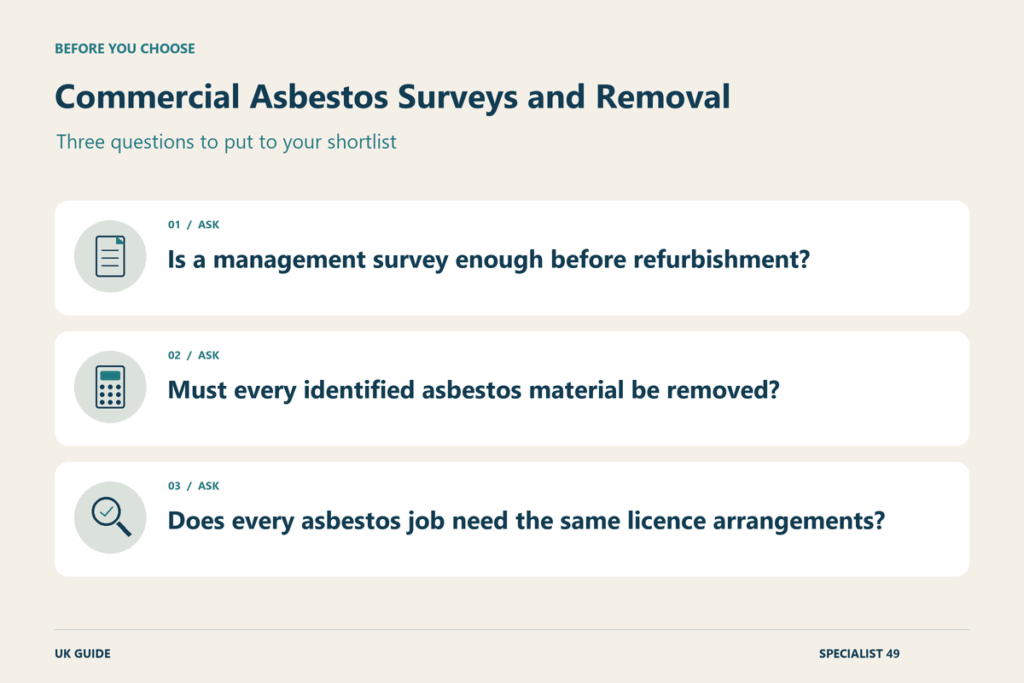
Is a management survey enough before refurbishment?
Not automatically. Tell a competent surveyor what work is planned and ask which survey and coverage are required. Existing information may not address intrusive work or concealed areas, so the scope must be assessed for the actual project.
Must every identified asbestos material be removed?
No blanket conclusion is appropriate. Obtain professional advice about condition, potential disturbance and management options. A survey finding should support a reasoned response rather than automatically become permission for an unnecessarily broad removal contract.
Does every asbestos job need the same licence arrangements?
Requirements depend on the work and applicable rules. Ask a competent adviser to identify the correct category, contractor and process, including the relevant UK jurisdiction. Do not infer requirements from one material name or a generic sales statement.
Further reading
Related reading
- Commercial Pest Control Contracts: Comparing Inspection Frequency, Treatment and Guarantees (UK)
- Trenchless Sewer Replacement Costs: Comparing Pipe Bursting, Relining and Excavation Quotes (USA)
- Commercial Mold Remediation Quotes: Comparing Testing, Containment and Clearance Costs (USA)
- Fire and Smoke Damage Restoration: Comparing Cleanup Quotes and Reconstruction Contracts (USA)
Explore more in Specialist Home and Commercial Services.